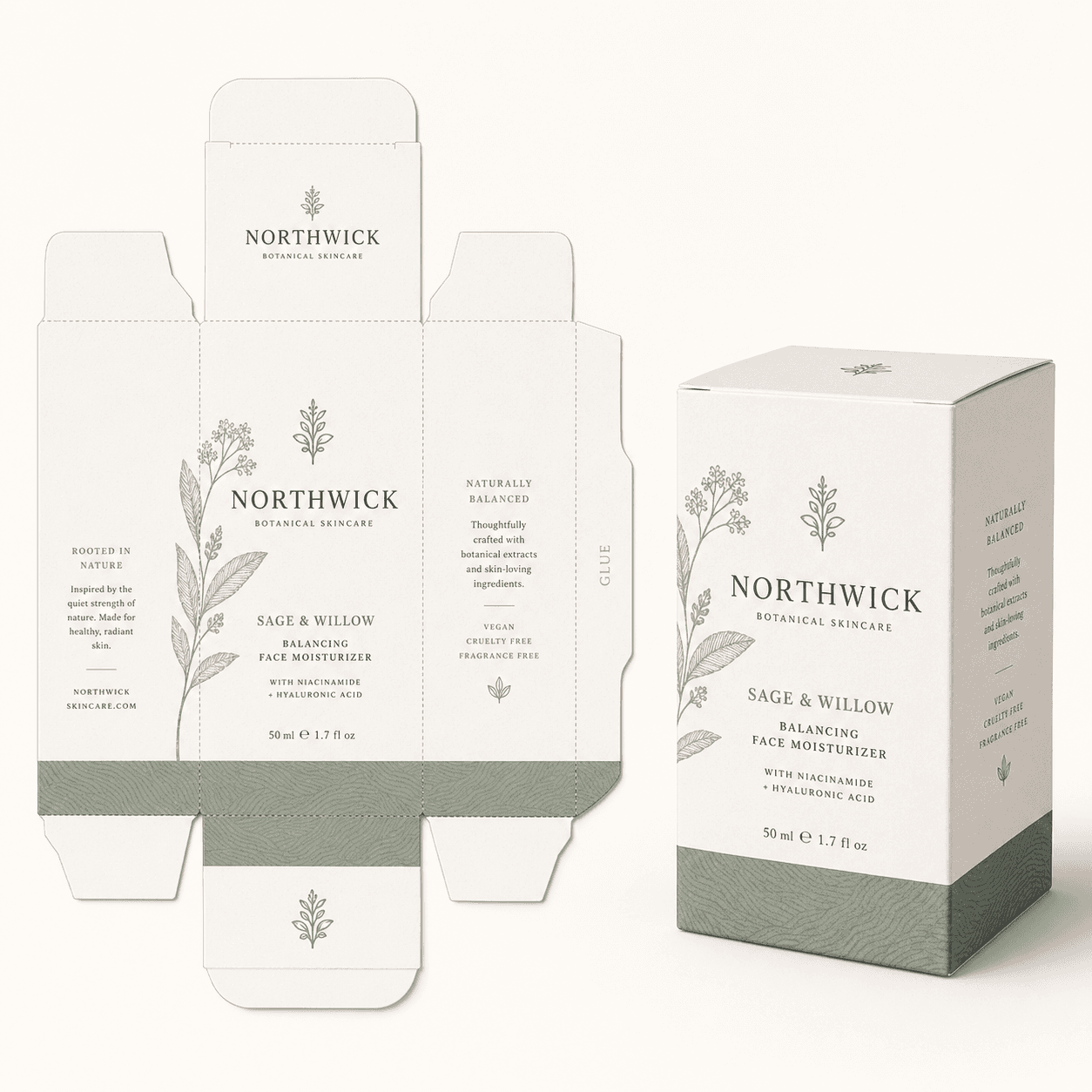
Paperboard
Paperboard suits folding cartons, retail boxes, sleeves and lighter product packaging. It provides a smooth print surface, folds efficiently and can support detailed artwork, windows and premium finishes.
Shape every detail around your product, from board and structure to colour, finishes, inserts, artwork and repeat production planning with expert support at each decision.
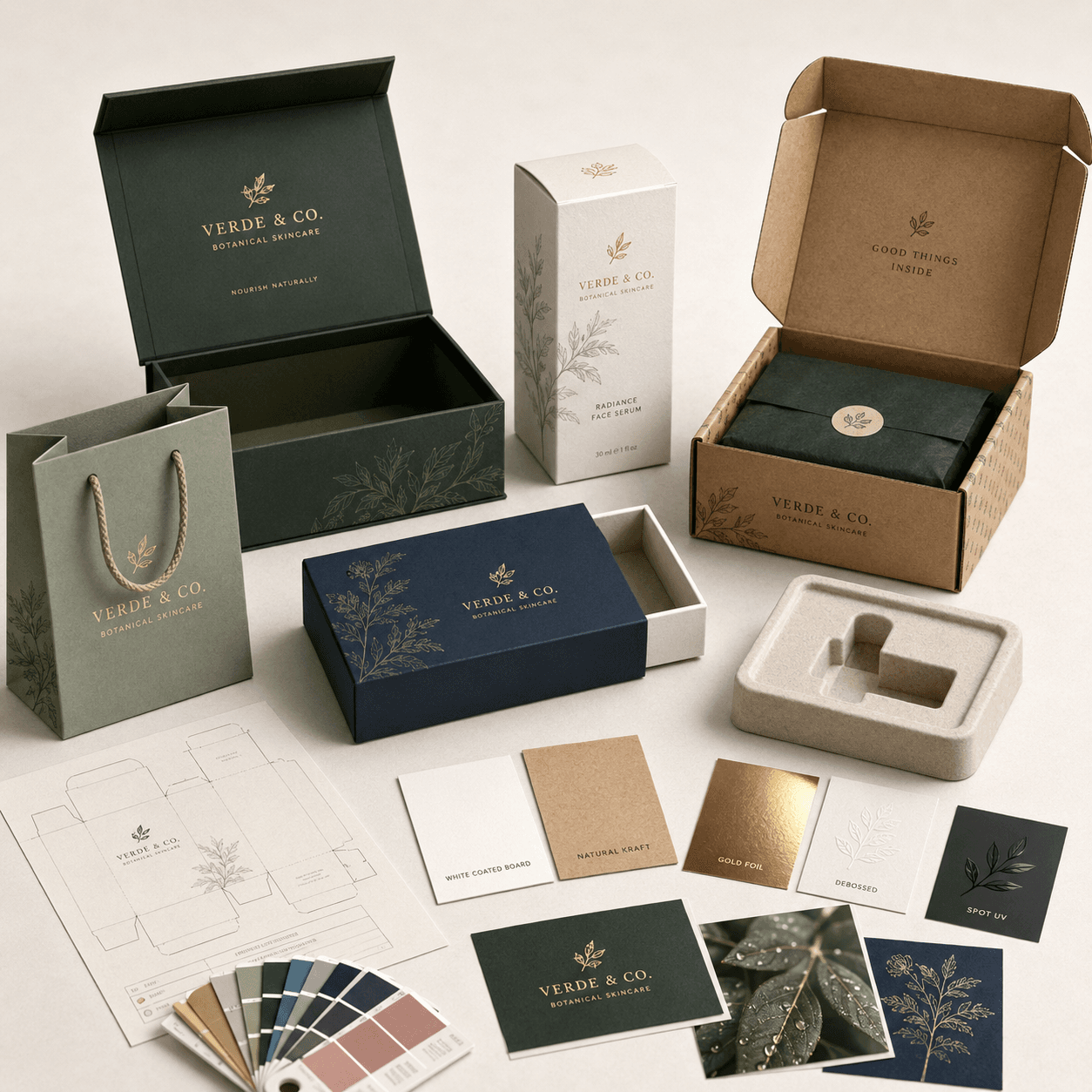
Effective custom packaging customisation starts with the product, not the decoration. The product’s dimensions, weight, fragility, presentation and delivery conditions should shape every later choice.
A beautiful box can still fail if the product moves inside it, the closure feels weak or the packing team struggles to assemble it. In the same way, a strong shipping box may feel unsuitable for a premium retail launch if the structure and surface do not support the intended presentation.
Custom Packly brings these decisions together. We help plan the size, board, structure, print placement, finish, insert and artwork so each detail works with the others. This reduces avoidable changes once artwork has started and gives production a clearer reference.
Customisation can begin with a simple logo and exact size or extend to inside printing, fitted paperboard inserts, foil, embossing and several coordinated packaging pieces. The right level depends on what the packaging must protect, communicate and achieve.
The material affects strength, folding, print appearance, finish compatibility and the way the packaging feels in the hand. We recommend the board after reviewing the product and intended use.
Paperboard suits folding cartons, retail boxes, sleeves and lighter product packaging. It provides a smooth print surface, folds efficiently and can support detailed artwork, windows and premium finishes.
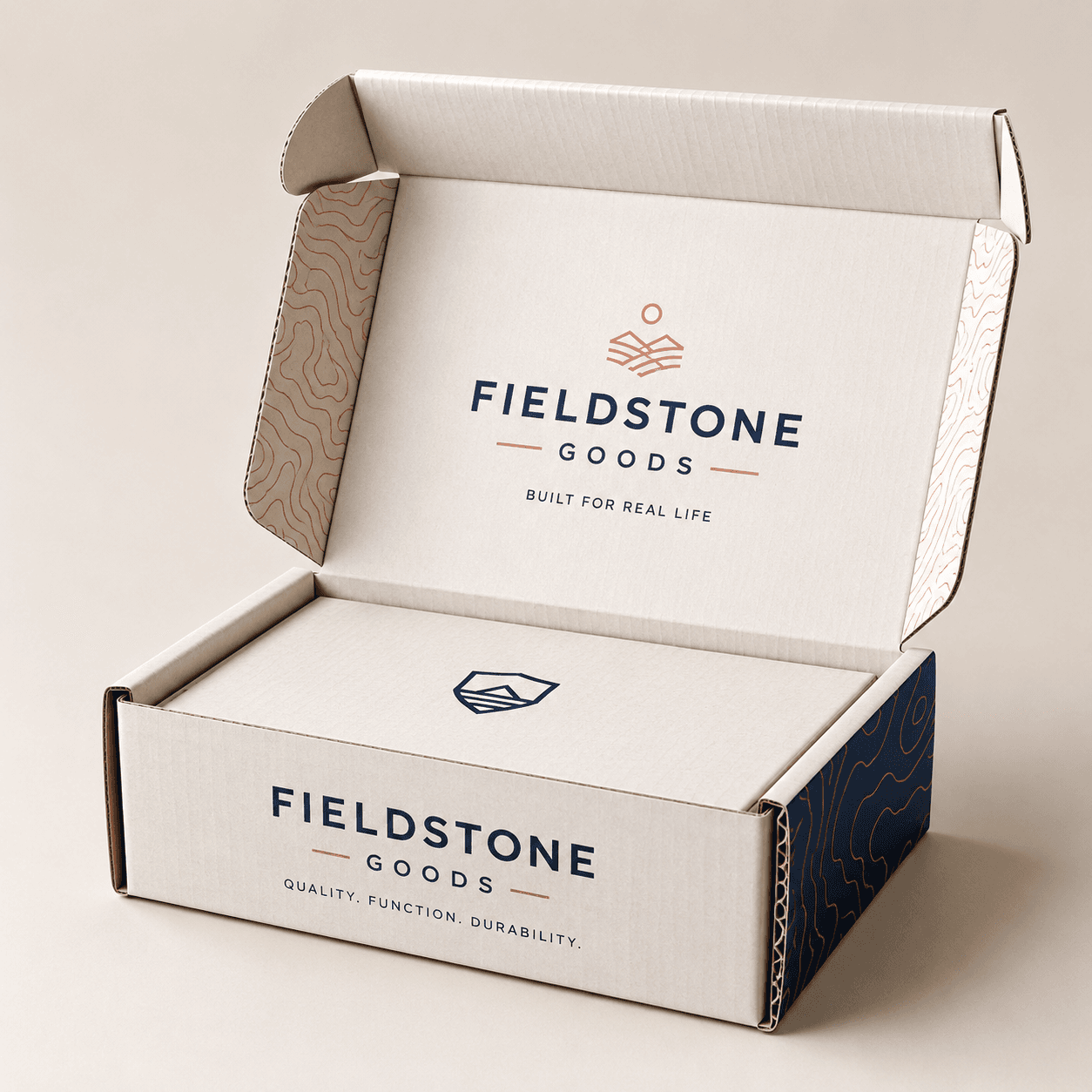
Corrugated board adds cushioning and resistance to pressure during handling and delivery. Flute choice, board construction and box dimensions should match the product weight and transit risk.
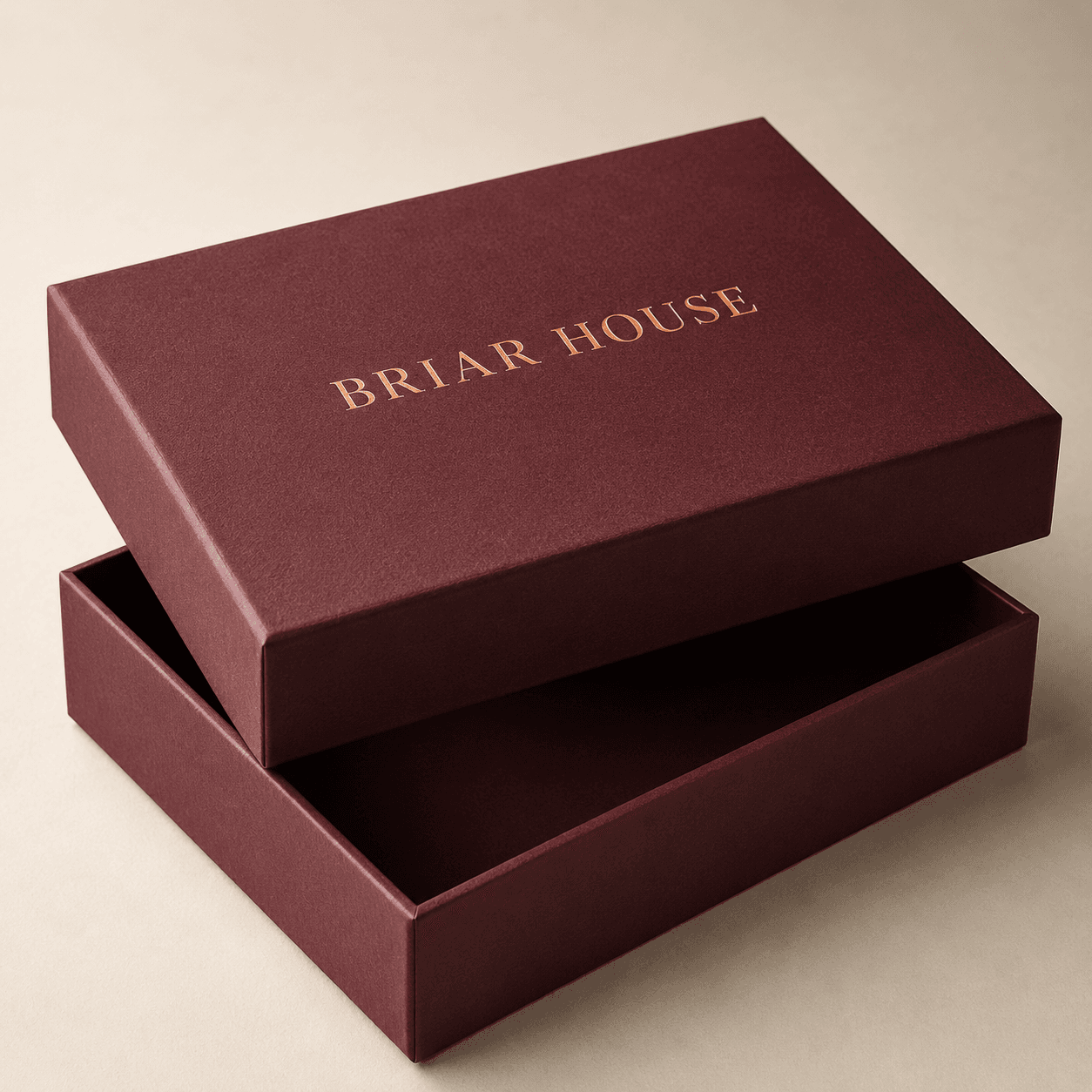
Rigid board creates a firm presentation box that keeps its shape. It suits gifts, jewellery, beauty products and launches where opening feel and long-term presentation matter.
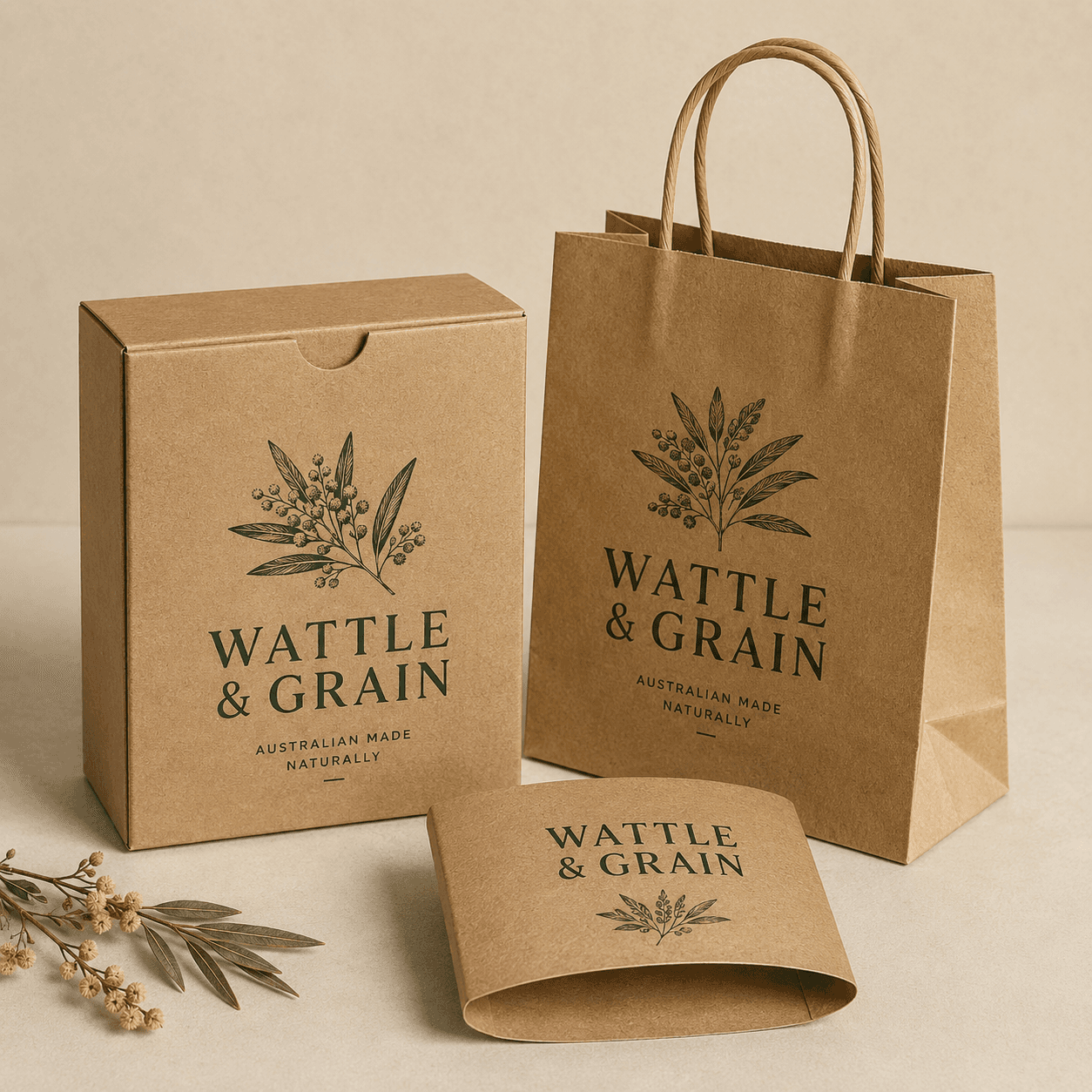
Natural surfaces create a tactile, understated appearance. Artwork must account for the base colour because inks may look different on brown kraft or coloured paper than on a white coated surface.
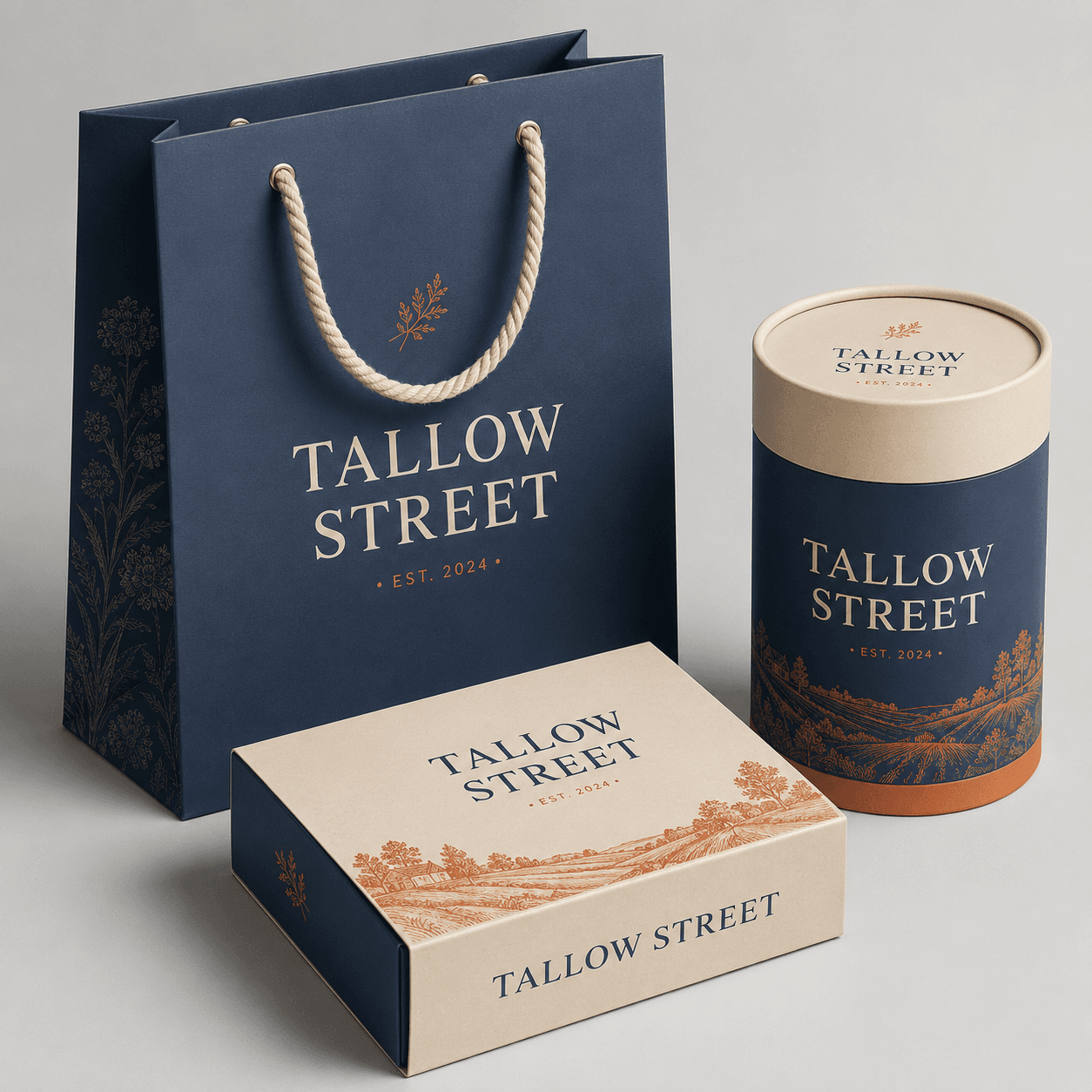
Paper bags, bands, sleeves and tubes can extend the same visual identity beyond the main product box. Dimensions, handles, seams and opening direction still need practical testing.
Structure determines how the packaging opens, closes, stores, travels and reaches the customer. The best choice should make handling easier while giving the product the right level of protection and presentation.
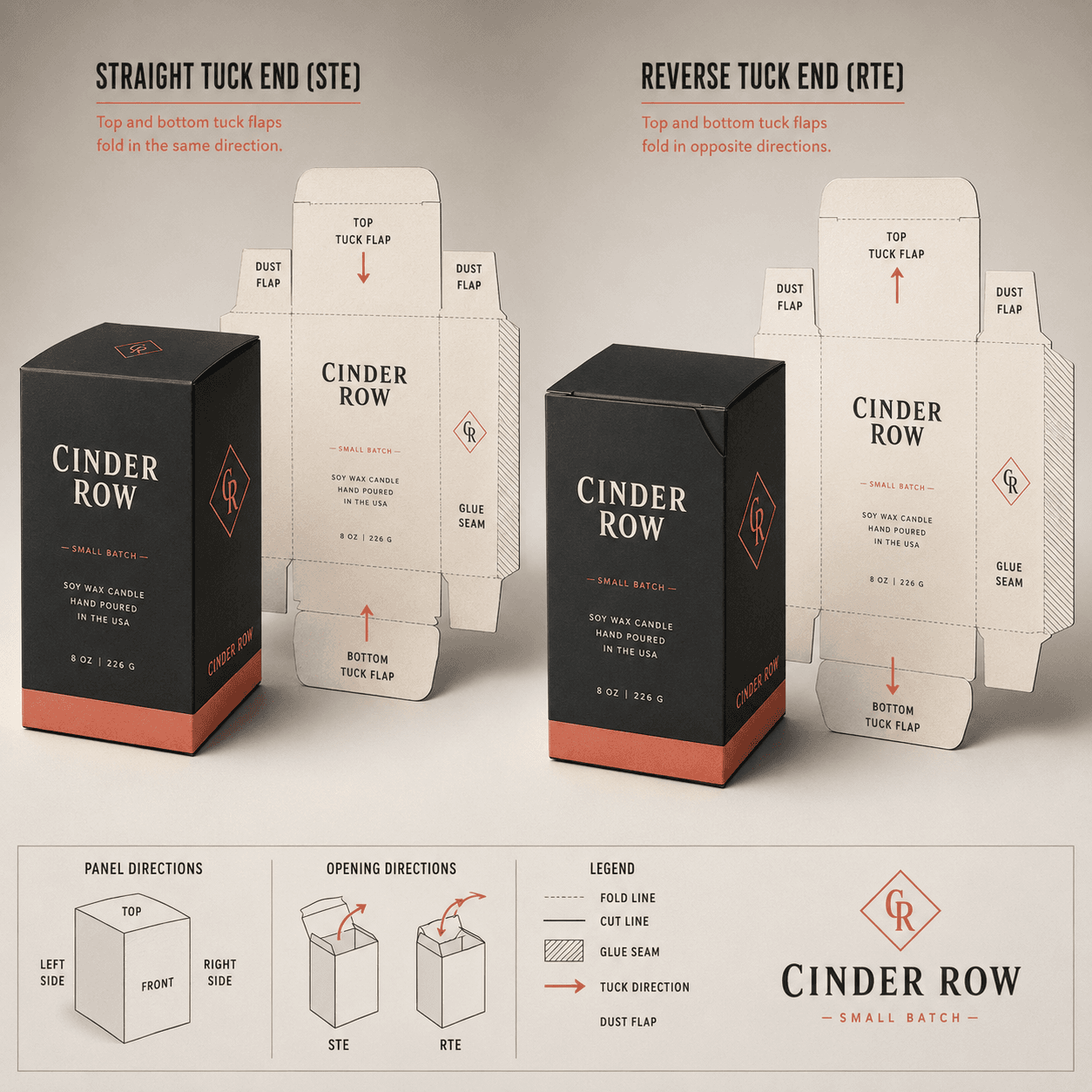
Folding cartons suit lightweight retail products and efficient flat storage. Tuck direction, bottom construction and loading method should match the product and packing process.
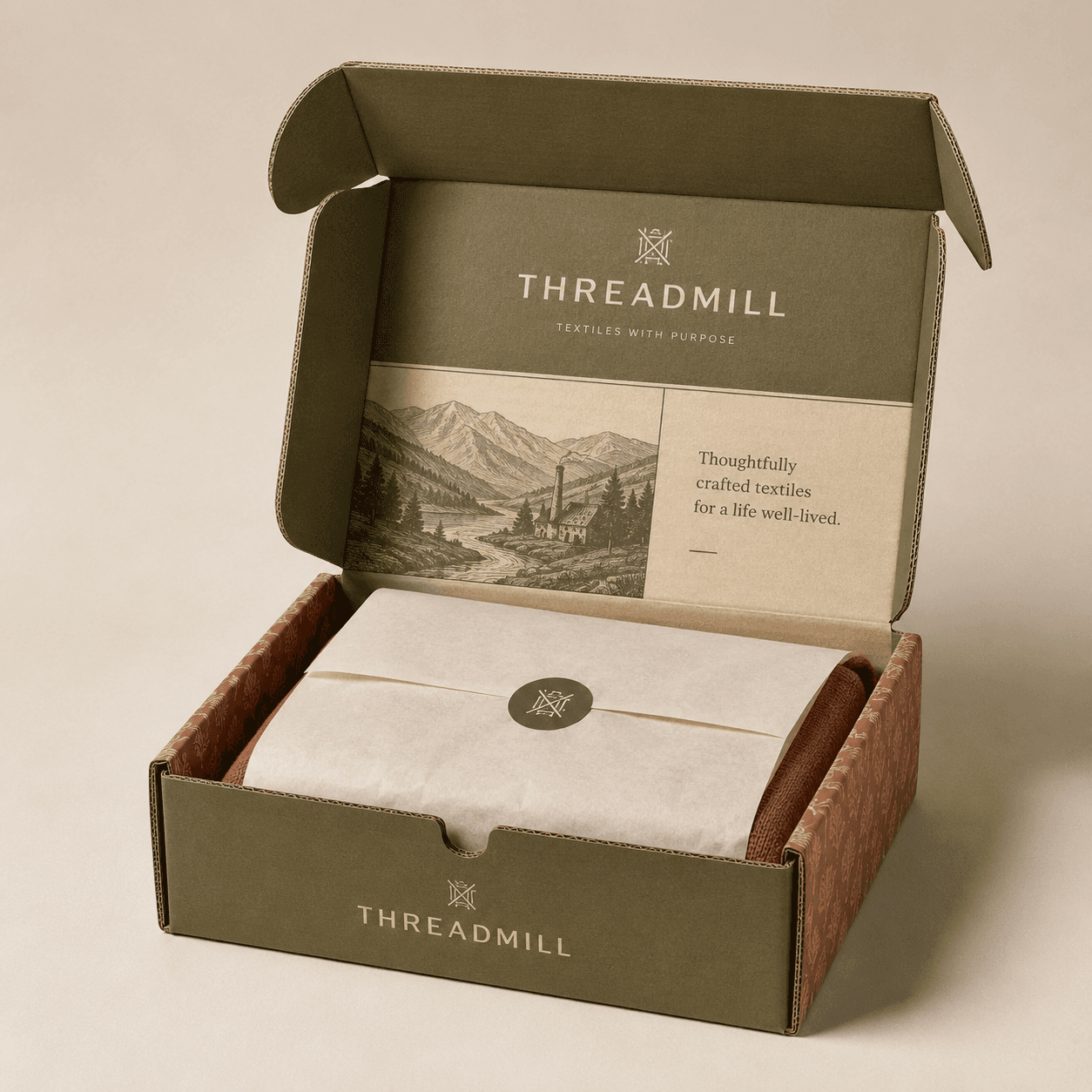
Mailers combine presentation with corrugated protection. The closure, wall depth, flute and internal space should reduce movement without creating unnecessary volume.
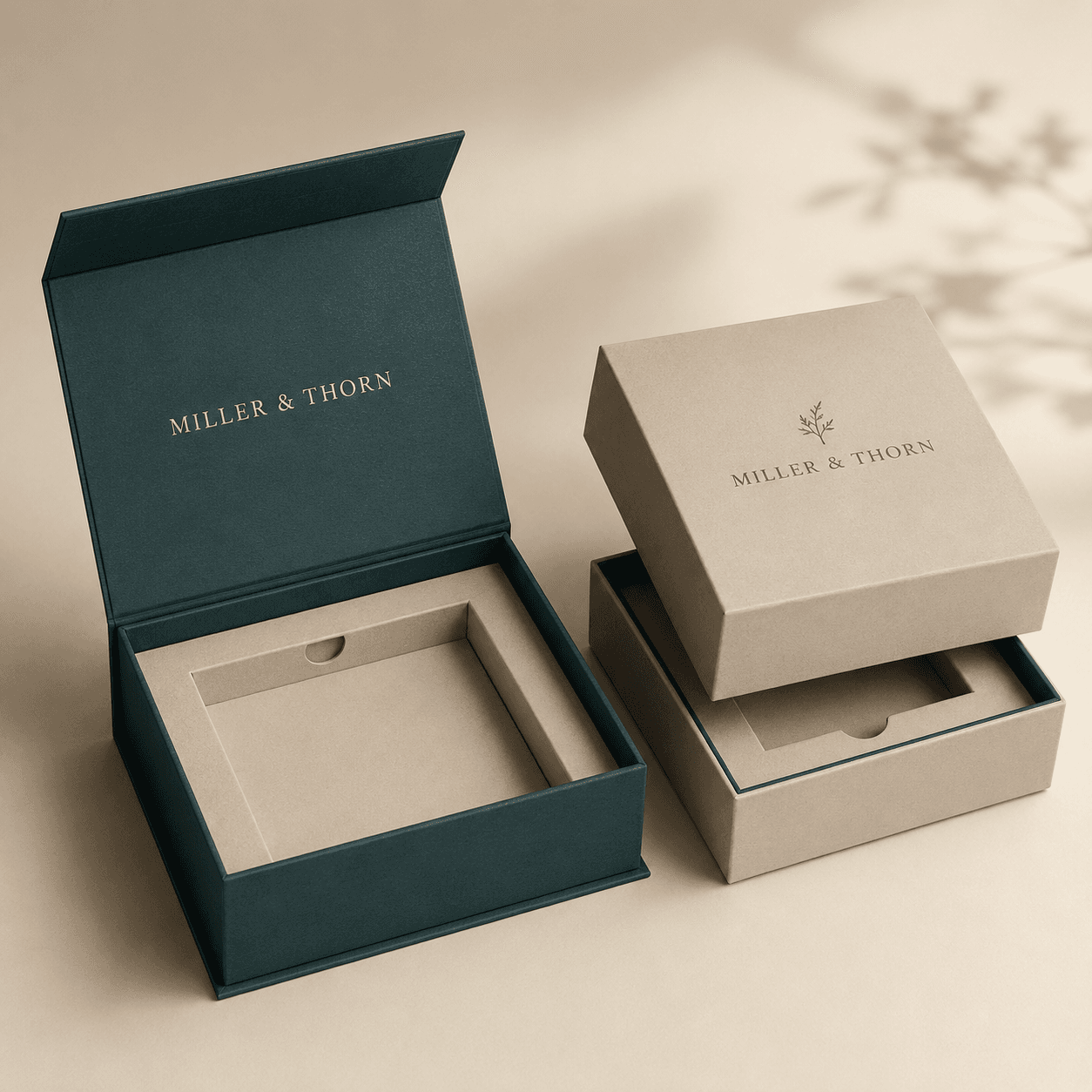
Custom rigid boxes suit products that need a stronger presentation, controlled opening experience and firm internal support.
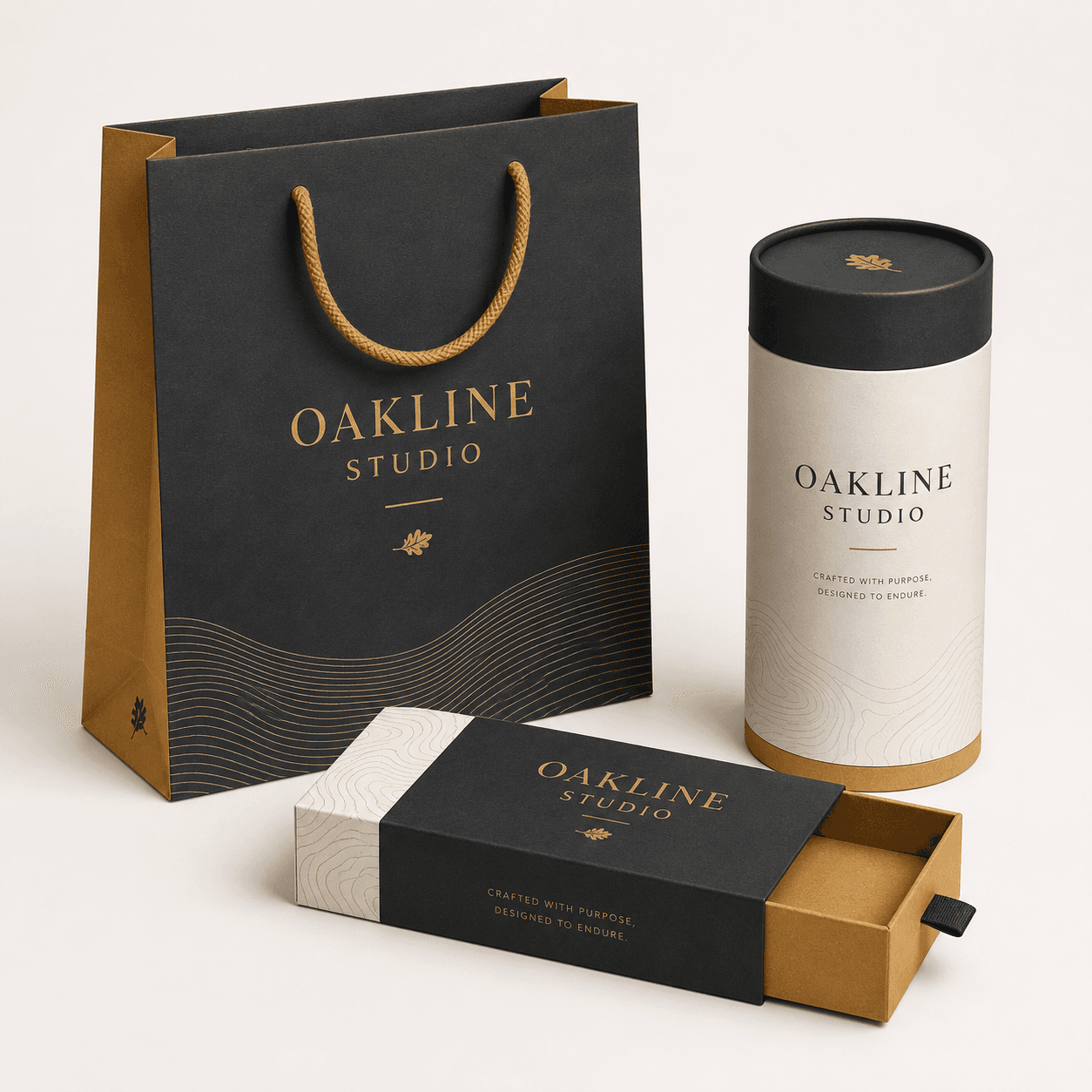
These structures can act as primary packaging, outer presentation or a coordinated addition. Their practical value depends on the product shape, carrying method and display requirement.
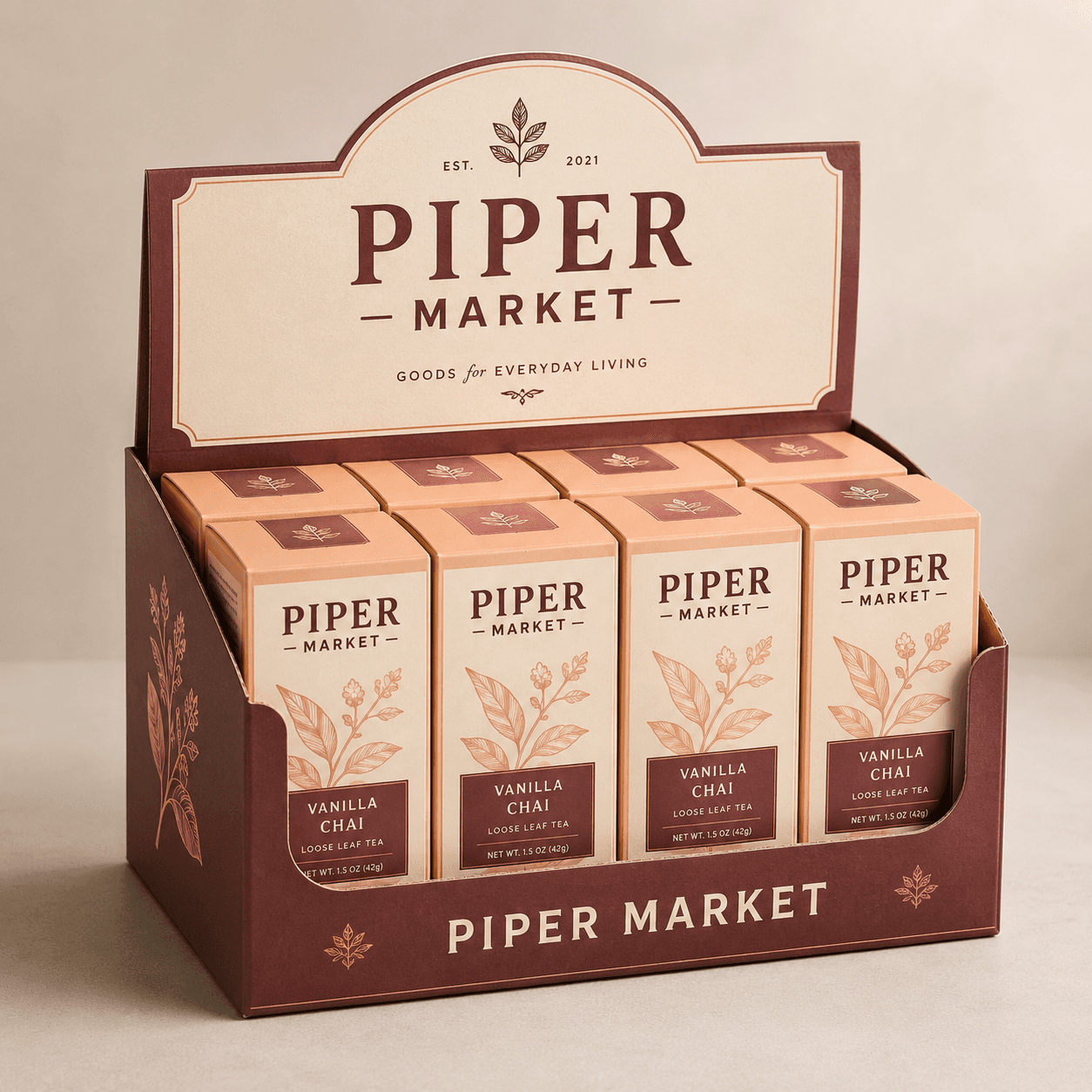
Counter and shelf-ready displays organise several products while keeping branding visible. Product count, access, stability and replenishment should be planned before the dieline is finalised.
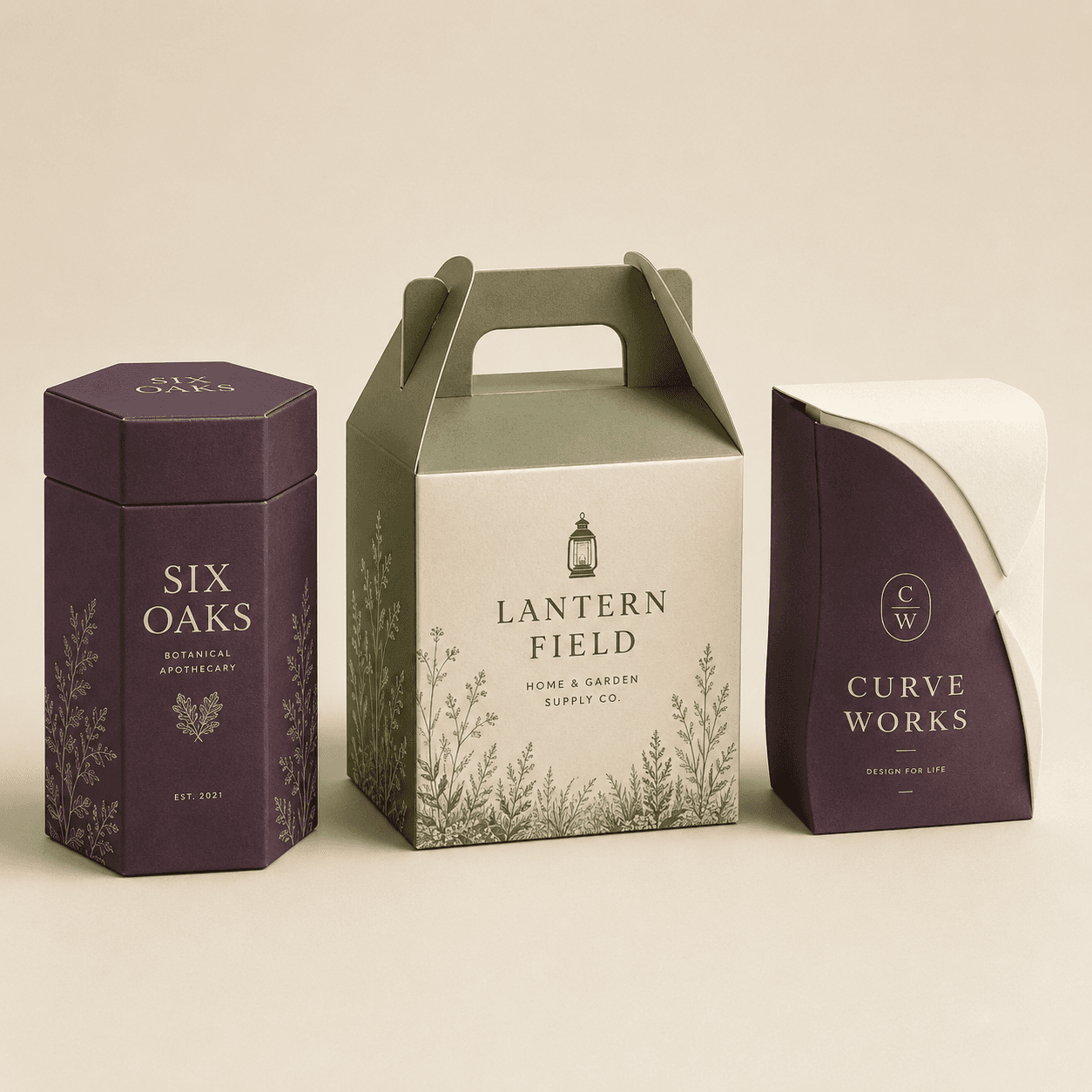
Unusual shapes can strengthen recognition, but they should still assemble cleanly, use space efficiently and protect the product. Decoration should not come at the cost of reliable handling.
Custom sizing should control product movement without making insertion or removal difficult. We normally assess the product’s widest, deepest and tallest points, then consider closures, inserts, board thickness and any accessories placed inside.
Internal dimensions matter more than outside dimensions when fit is critical. A candle jar, cosmetic bottle or electronics accessory may need extra clearance for an insert, while a flat apparel item may need enough depth to avoid pressure marks.
The intended packing process also changes the ideal size. Hand-packed gift sets may allow a slower presentation sequence, while frequent ecommerce orders need a structure that forms and closes efficiently.
Good sizing can reduce empty space, improve stacking and create a more intentional opening experience. It also gives artwork a stable panel layout before design work begins.
Offset printing supports detailed graphics, consistent coverage and polished brand presentation. It works well when colour quality and repeat consistency are important.
CMYK suits full-colour artwork and photographic detail. Pantone references help communicate critical brand colours, though the material and surface finish can affect the final appearance.
Outside print introduces the brand before opening. Inside print can carry patterns, instructions, product stories or a controlled reveal without changing the external design.
Small text, symbols and fine lines need enough contrast and space to remain clear after printing, cutting and folding. Important content should sit away from creases and trim edges.
A finish can change sheen, texture, contrast and perceived value. The strongest results come from choosing one or two effects that support the design rather than applying every available technique.
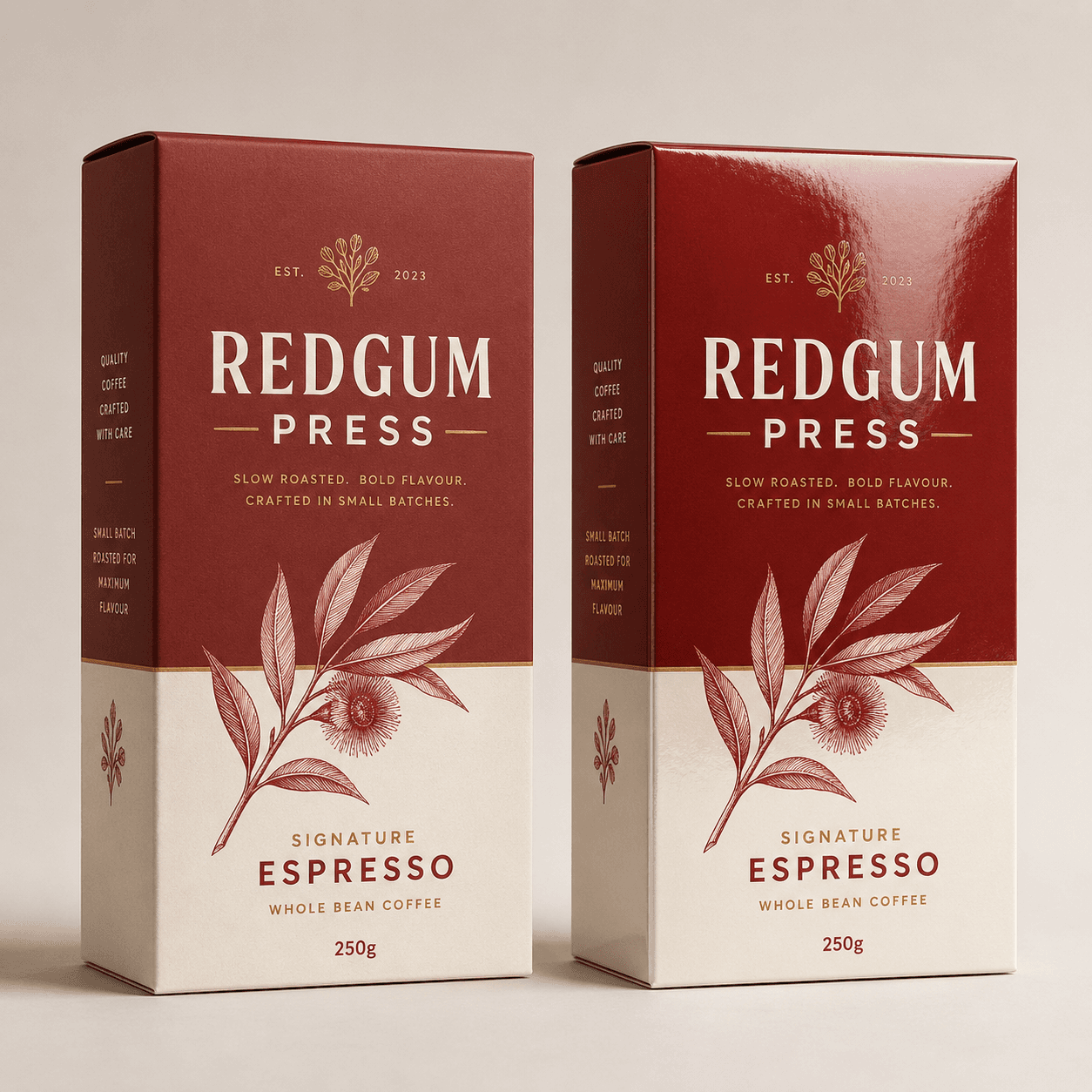
Matte reduces shine and creates a softer appearance. Gloss reflects more light and can make colour feel more vivid. Suitability depends on the board and intended handling.
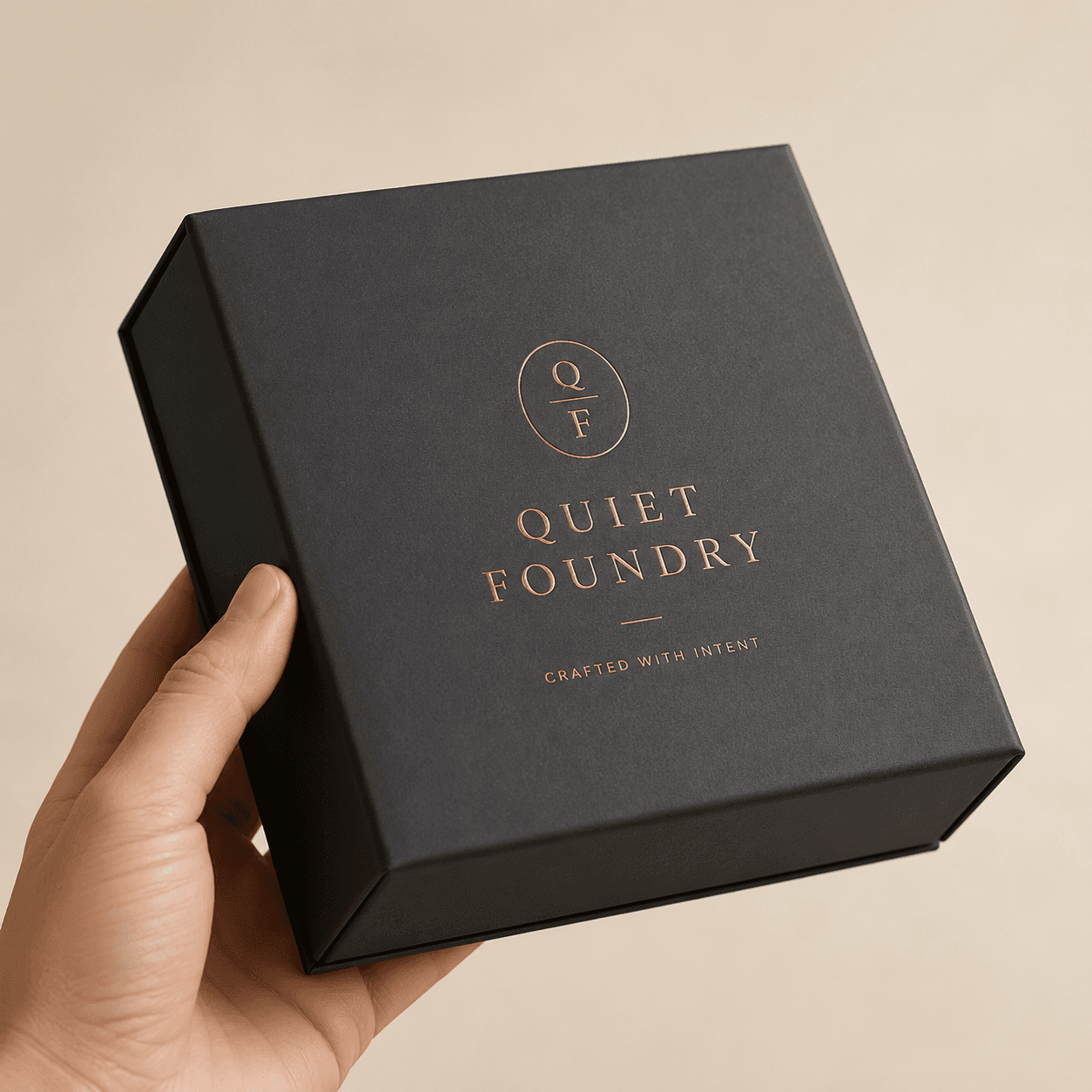
Soft-touch creates a smooth, low-sheen feel that can suit premium presentation. It works best when the tactile effect supports the product positioning.
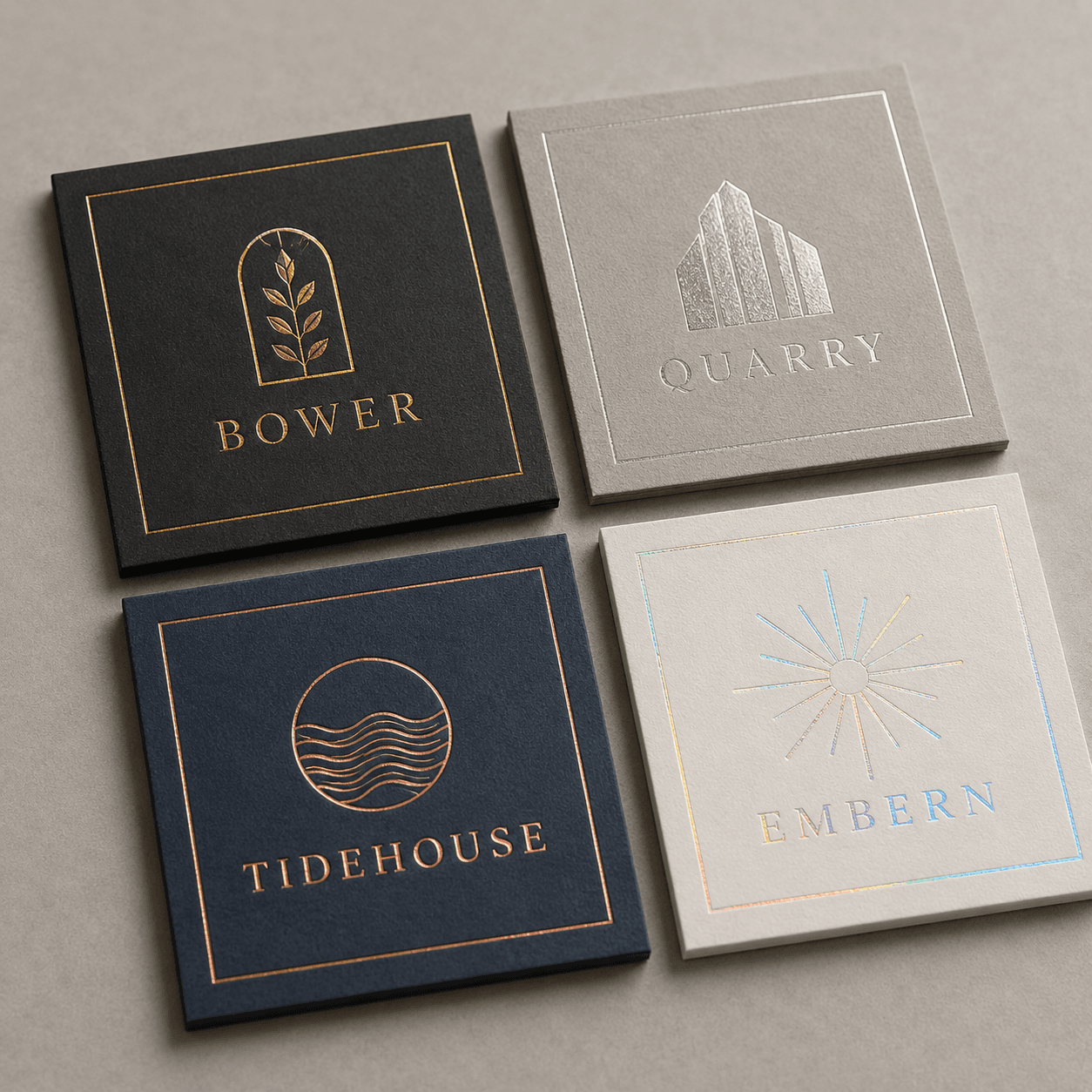
Foil creates strong contrast on logos, borders and selected details. The foil area, surrounding artwork and surface should be planned together to keep the result clean.
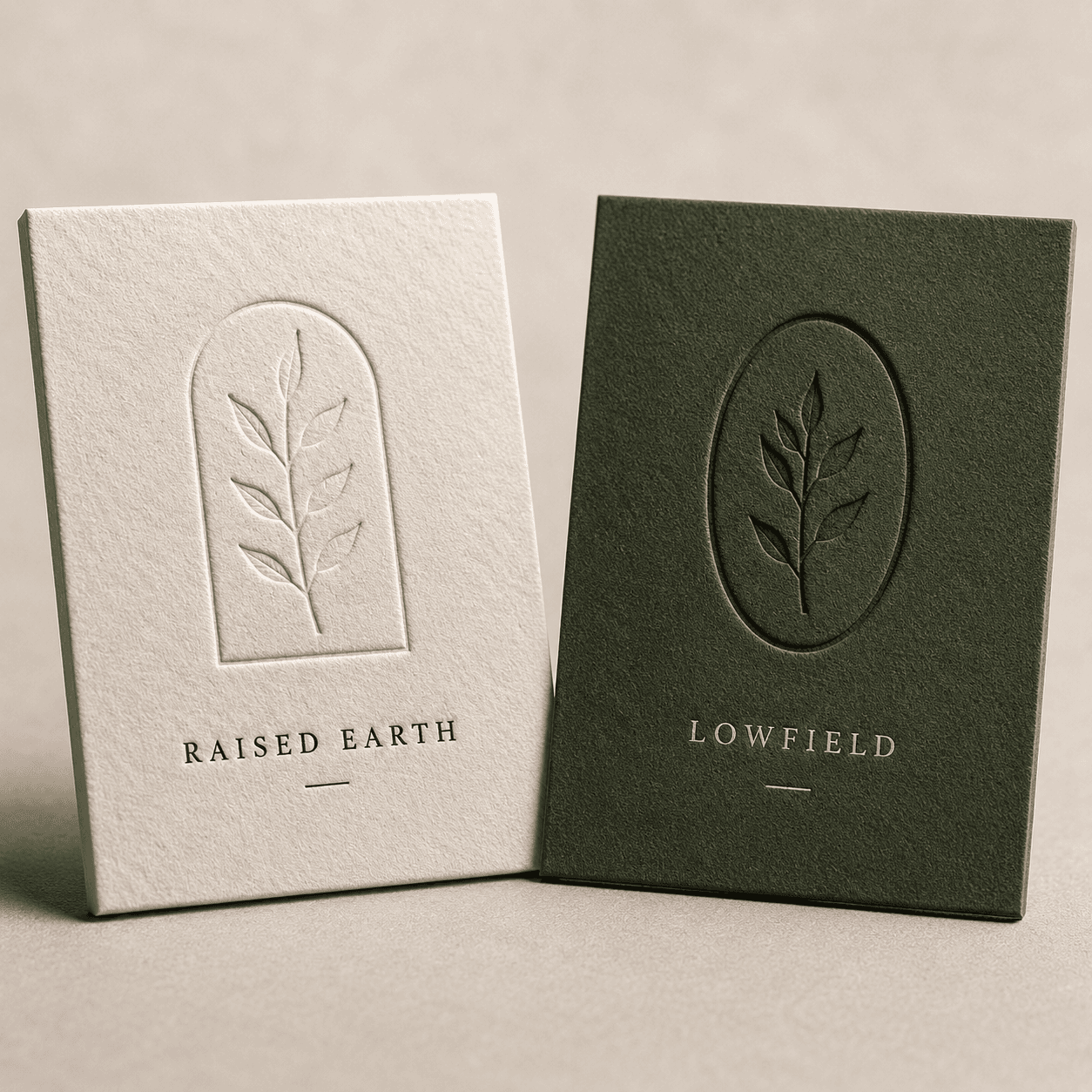
Raised or recessed details add texture without relying only on ink. Letter size, line thickness and placement affect how clearly the impression forms.
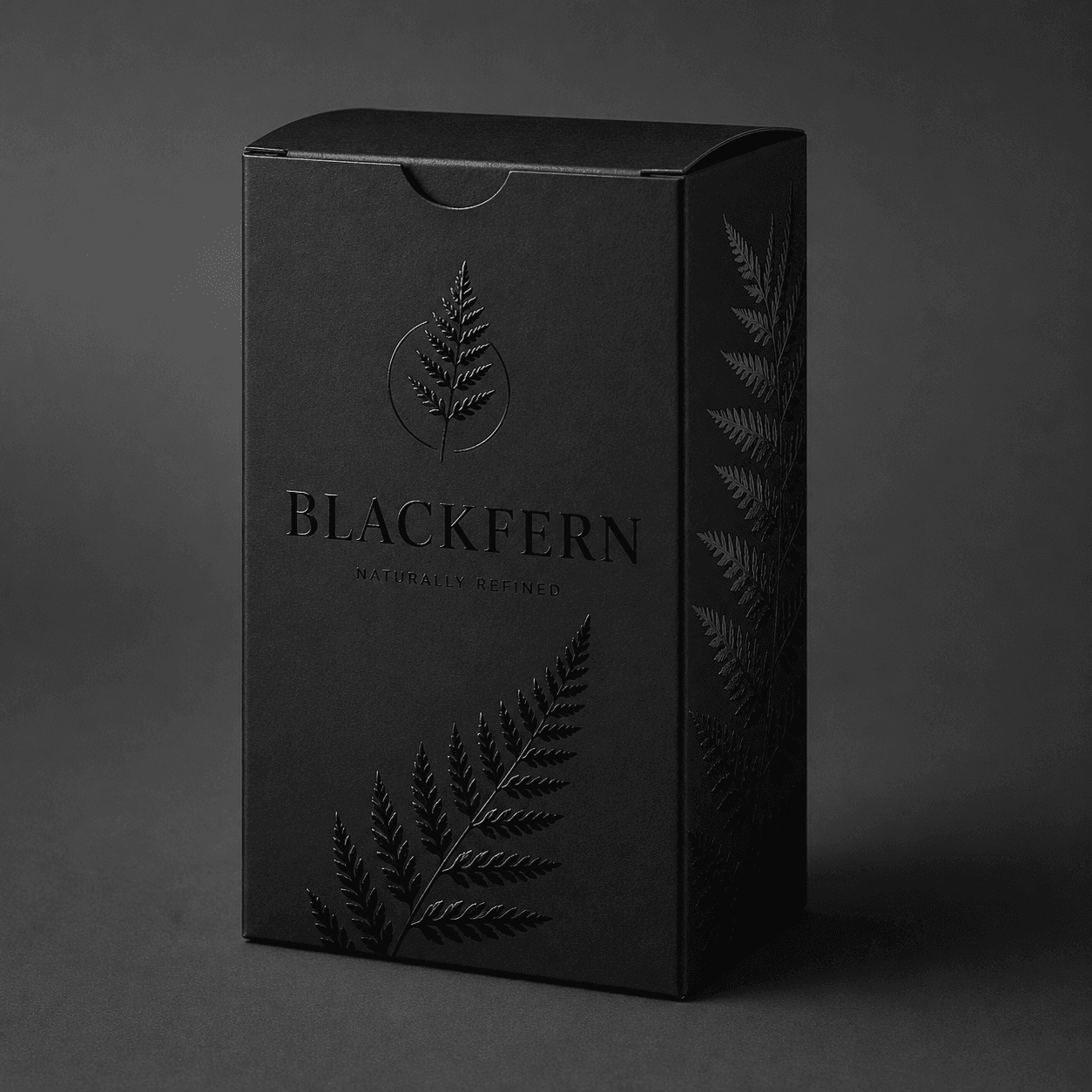
Spot UV places gloss on selected areas to create contrast against a matte background. It is most effective when used on simple, intentional artwork elements.
An insert should stop unwanted movement while keeping the product easy to remove. It can also organise sets, support delicate items and improve the way products appear when the box opens.

Paperboard can fold into platforms, collars and compartments for lighter products. Accurate cut-outs are essential when bottles, jars or accessories must sit in a set position.
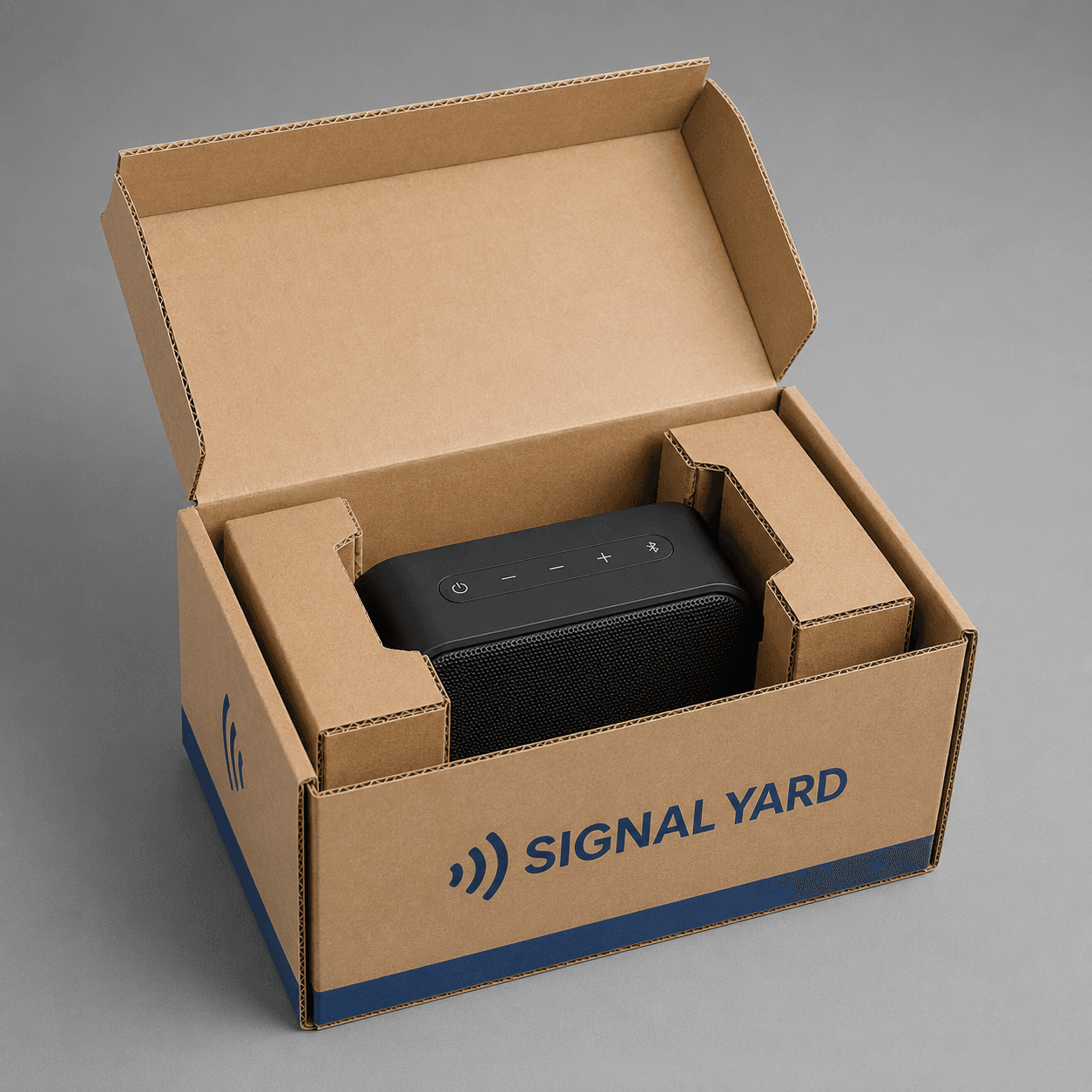
Corrugated supports suit heavier products or delivery conditions where extra cushioning and edge protection are required.
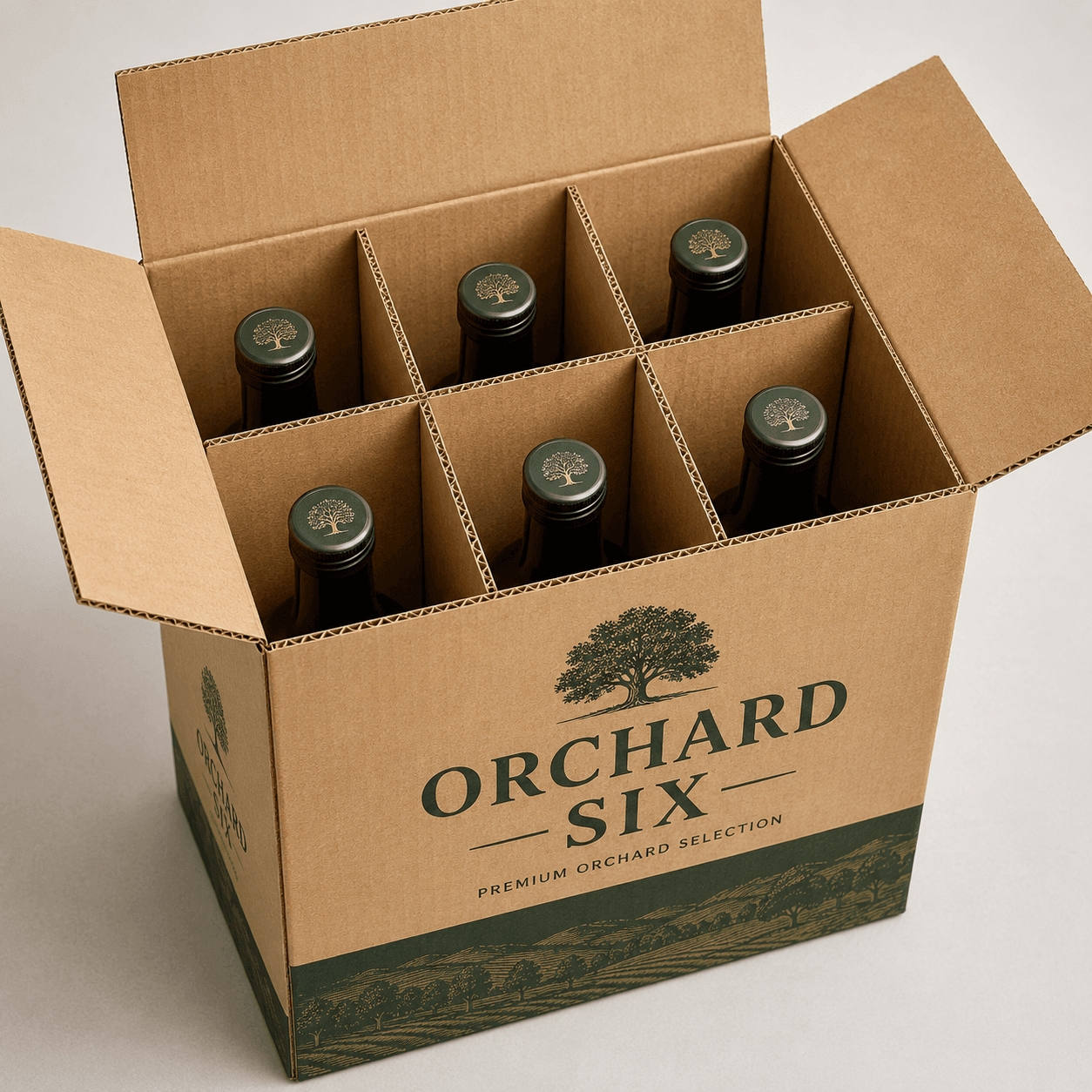
Dividers separate products and reduce contact during handling. Cell size, board thickness and loading direction should match the contents.
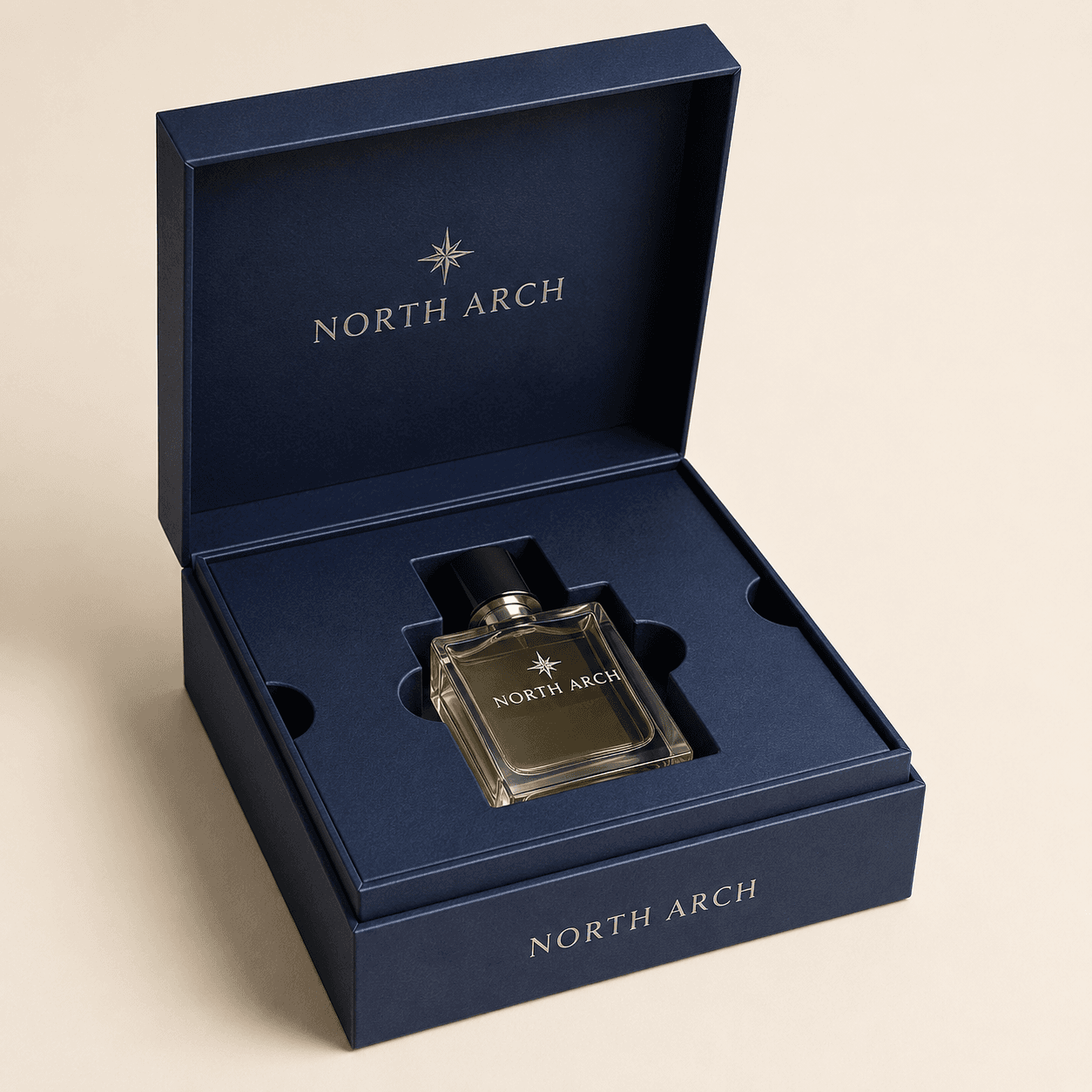
Raised platforms can position a product closer to the opening and hide unused depth. They should remain stable when the box is lifted or tilted.
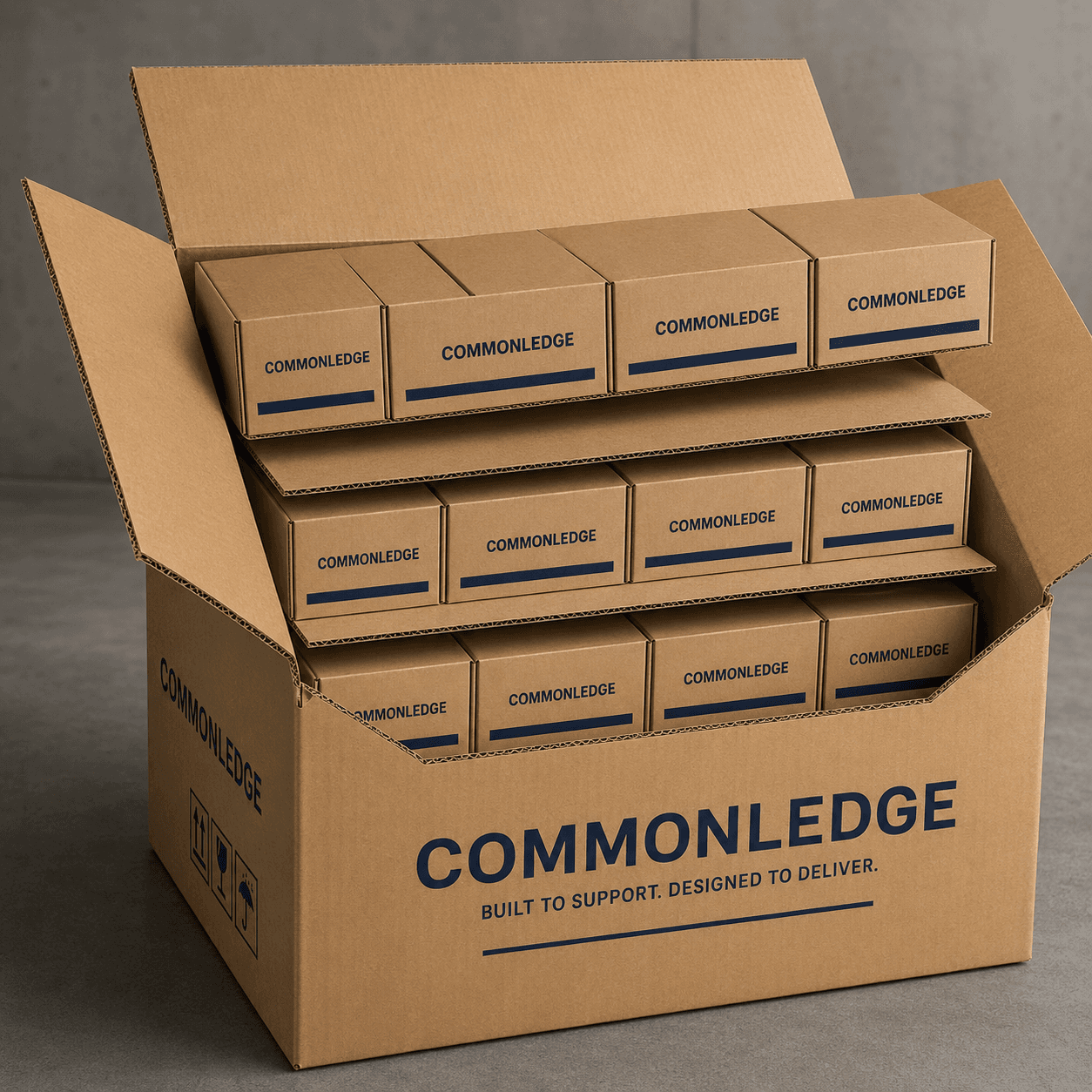
Flat pads can separate layers, spread pressure and organise multiple items inside a larger carton or presentation box.
Clear technical information gives the designer the correct canvas and helps us recommend practical customisation options.
Prepare as many of these details as possible:
Missing some details does not prevent you from starting. Our team can help resolve structure, sizing and artwork questions before the packaging is prepared for production.
A dieline is the flat technical drawing used to cut, crease and assemble packaging. It shows each panel, flap, fold and glue area so artwork can be placed in the correct position.
Artwork should follow the confirmed dieline rather than an estimated canvas. Important text and logos need safe space from cut lines and folds, while background colour or images usually extend into the bleed area.
The free Dieline Tool can help prepare downloadable dielines for suitable box styles. Expert support is also available when a custom structure, insert or unusual product shape needs more detailed planning.
A well-prepared dieline reduces artwork movement, panel misalignment and last-minute corrections. It also creates a clearer reference for future reorders.
Artwork is checked against the dieline for panel placement, bleed, safe areas, folds and finish layers. Clear file organisation reduces production questions.
A 3D mock-up helps review artwork placement, panel direction and the overall appearance of the assembled packaging before production.
A physical sample may be recommended when product fit, insert tension, opening feel or a complex finish needs hands-on checking.
The approved dimensions, structure, artwork and finish details provide the reference used to prepare the full production run.
An apparel brand originally planned to launch its products in a standard mailer. After reviewing the product value, launch presentation and opening experience, our team recommended a rigid box instead.
The stronger structure gave the launch a more considered presentation and helped the packaging feel aligned with the product. The change contributed to stronger revenue while creating a box customers were more likely to keep.
The lesson was not that rigid boxes are always better. It was that the structure needed to match the product’s position and the moment in which customers received it.
A high-volume ecommerce business needed around 60,000 mailer boxes each month. Its previous supply had inconsistent quality, delays and pricing problems.
Better print control and planned storage created a steadier production program. The business received consistent packaging for nine months while maintaining the appearance and structure required across repeated runs.
At that scale, customisation is not only about the first artwork approval. It also includes repeat specifications, stock planning, quality references and reliable production scheduling.
The minimum order starts from 50 units, which supports smaller product launches and initial custom packaging requirements.
Australian production supports a standard turnaround of 4 to 6 days, with free delivery included for completed packaging orders.
Production can scale from starter quantities to thousands or tens of thousands of units, with storage support for planned repeat requirements.
Confirmed structures, artwork and finish specifications help maintain consistency between orders. Repeat-order discounts are available.
Packaging support is available 24/7 through chat, email and call when questions arise about size, structure, artwork or production.
Custom Packly brings 15 years in business, 21 years of combined team experience and production partners with 30 years of experience. More than 500 companies have been served across thousands of completed orders and millions of boxes.