Product Shape and Weight
Bottles, jars, garments, food portions and small accessories place different pressure on the board. Size and weight affect the outer structure, base strength and internal support.
Find packaging around what you sell, how it is handled and where it reaches customers, from food and beauty to ecommerce, gifting and electronics.
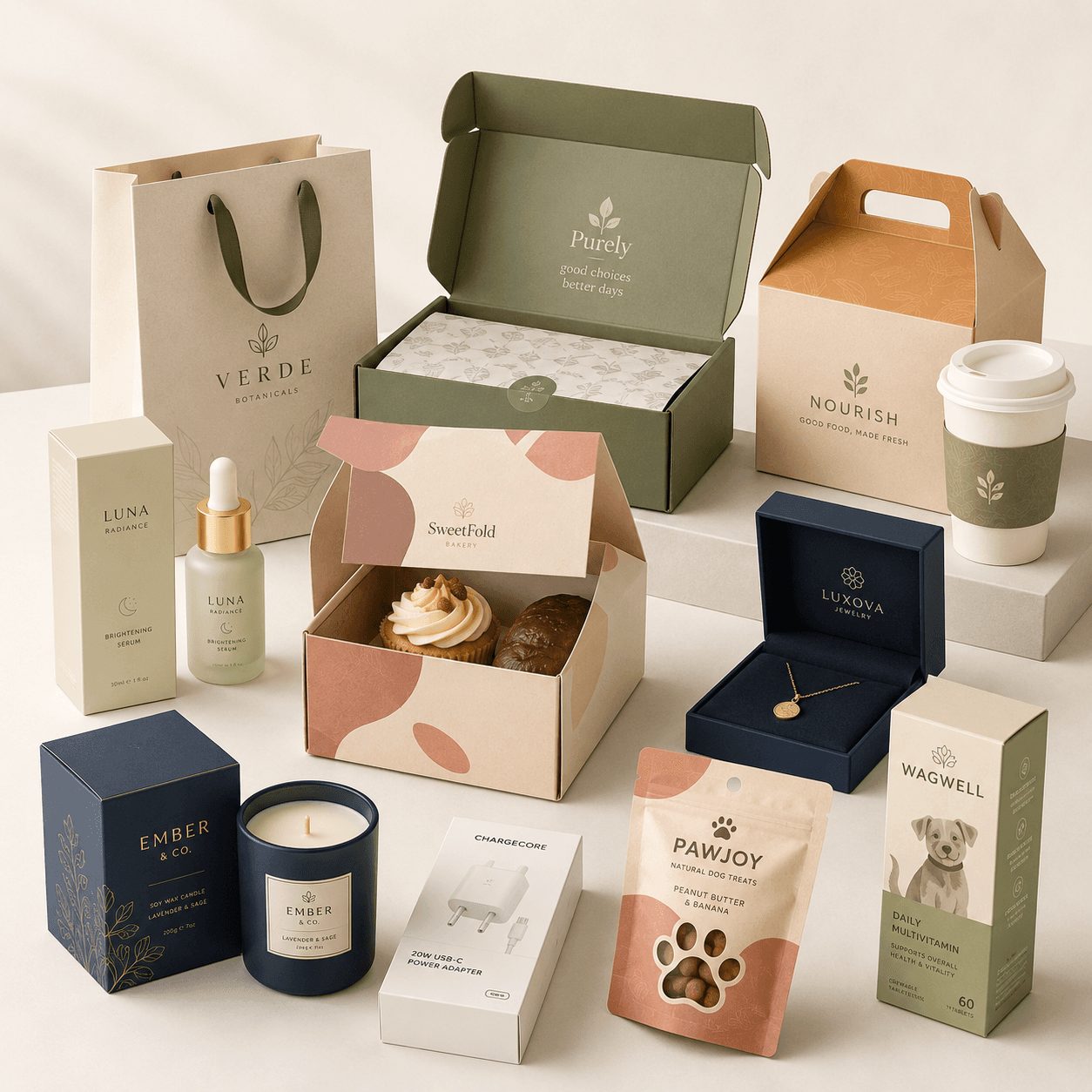
The most useful starting point is what the product is, how it behaves and what must happen before it reaches the customer.
A glass serum bottle, iced cupcake, charging cable, bracelet and dog treat pouch may all need printed packaging, but the practical requirements are very different. Weight, breakage risk, food contact, product movement, retail display, courier handling and required information can change the structure completely.
Starting with the industry helps narrow those needs before choosing board, print or finishing. It also prevents a common mistake: selecting packaging because it looks attractive while overlooking the product fit or handling conditions.
Once the product requirements are clear, Packaging Styles helps narrow the structure itself. That may lead to a folding carton, corrugated mailer, shipping box, rigid box, paper bag, sleeve, tube, pouch, display box or fitted insert.
Businesses that need a fuller view of boxes, bags, tubes, sleeves and other paper-based options can use Custom Packaging alongside the industry path.
Bottles, jars, garments, food portions and small accessories place different pressure on the board. Size and weight affect the outer structure, base strength and internal support.
Glass, electronics and mixed product sets may need inserts or dividers. Soft goods and lightweight cartons often need less internal control but still require a clean fit.
Retail shelves, ecommerce delivery, takeaway counters, gifting and event handovers each create different demands for visibility, carrying, sealing and opening.
Ingredients, directions, warnings, shade names, flavour details and technical information need clear panels that remain readable after folding and assembly.
Some products need quick access. Others benefit from a slower reveal, fitted placement or inside print that strengthens the experience after opening.
A practical choice should suit the first run, future product variations and repeat production without creating unnecessary storage or packing problems.
Beauty and wellness packaging often depends on precise fit, clean printing and enough space for ingredients or directions. Small bottles, jars, tubes and compacts can move inside an oversized carton, while glass fragrance and candle products may need stronger board or fitted inserts.
Presentation also carries more weight in these industries. Matte surfaces, foil, embossing and controlled colour can support a premium appearance, but the product must sit correctly before decorative finishes are considered.
Candle jars, diffuser bottles and room sprays add weight and breakage risk. The outer box, base and insert should work together rather than relying on decorative paper or loose filling to hold the product.
Food packaging must work during filling, carrying, serving or delivery. The most important requirement may be grease resistance, food-friendly material, ventilation, portion fit, window placement or enough strength to hold the product without bending.
A cake box needs different support from a cookie carton. A burger box must close quickly during service, while a takeaway bag must carry several items without tearing at the handle or base.
Food and beverage products sold on retail shelves may also need more room for ingredients, preparation details and product information. The structure should allow those details to remain clear without crowding the main branding.
Retail packaging balances presentation with storage and handling. Clothing boxes, paper bags and sleeves should keep garments neat while allowing staff to assemble or fill them without unnecessary steps.
Jewellery and accessories need more exact placement. Rings, earrings, necklaces and watches can shift even inside a small box. Fitted paperboard inserts, dividers or cradles can keep the item centred and improve the opening experience.
The packaging should also match the handover. A product collected in store may use a presentation box and paper bag, while the same item sent online may need a protective mailer around the retail packaging.
Ecommerce packaging must protect the product through handling while remaining practical to store, assemble and close. Mailers and shipping cartons should use dimensions that control movement without adding avoidable empty space.
Electronics add component organisation. Chargers, cables, headphones and accessories often need separate positions so they do not rub, tangle or move during delivery. Inserts can also make small components easier to see when the box opens.
A single printed mailer may handle presentation and delivery for some products. More fragile or higher-value items may need an inner carton, fitted insert and stronger outer box.
Event and corporate packaging often holds several items that need to feel coordinated. Welcome gifts, conference kits, hampers and promotional products may use compartments, dividers or layered presentation so each item remains organised.
Pet packaging varies widely. Treats and food products may need pouches or cartons with clear product information, while grooming products, toys and subscription orders may need mailers, inserts or dividers.
The correct choice depends on whether the product is sold individually, grouped into a gift or delivered as part of a recurring order.
Good industry packaging works when structure, material and presentation support the same purpose.
Corrugated board can add cushioning and stacking strength for deliveries. Folding paperboard cartons suit lighter retail products and detailed printing. Rigid board gives gift products and high-value items firmer walls and a more deliberate opening. Sleeves and paper bags can add branding or carrying support without replacing the main protective structure.
Inserts should solve a clear problem. They may stop bottles touching, hold an accessory in view, separate several products or protect a fragile part from movement. An insert that looks tidy but makes filling slow or removal difficult may create more problems than it solves.
Printing also needs to follow real use. A front panel may lead on a retail shelf, while a lid becomes the main branding surface on a mailer. Inside print can add value for gifting or ecommerce orders, but may be unnecessary for takeaway or transport packaging.
Materials, printing, finishes and insert choices can be planned through customisation once the product and industry requirements are understood.
Clear product information makes it easier to recommend a practical structure and prepare accurate pricing.
Share:
You do not need to decide every technical detail before contacting Custom Packly. A clear product description, quantity and intended use are enough to begin a useful discussion through Get a Quote.
Packaging becomes easier to manage when related products share a clear system without forcing every item into the same box.
A skincare collection may use one visual design across several carton sizes. A bakery may keep the same branding across cake, cookie and pastry boxes while changing the structure for each product. An electronics business may use related inserts across several accessories but retain different outer dimensions.
Some products can share a box with alternative inserts. Others need separate dielines because the size, weight or opening method changes too much. The aim is not to reduce every product to one structure. It is to keep materials, colour, print placement and reorder information organised across the product line.
MOQ starts from 50, with support for larger production runs, repeat orders and high-volume packaging programs as requirements grow. Starter quantities can help confirm the direction, while later runs can retain approved dimensions, artwork placement and production specifications.
Planning ahead is especially useful when a business expects seasonal artwork, additional flavours, new shades, gift sets or several delivery quantities. The initial packaging brief should identify what may change and what should remain consistent.
Share your product details, dimensions, quantity and artwork needs. We’ll help choose the right packaging style and send a clear quote.