Protection During Delivery
Corrugated shipping boxes, protective mailers and fitted inserts suit products that face courier handling, stacking or movement inside the carton.
Choose packaging by how your product needs to ship, sit on a shelf, open, protect fragile parts or carry your branding.
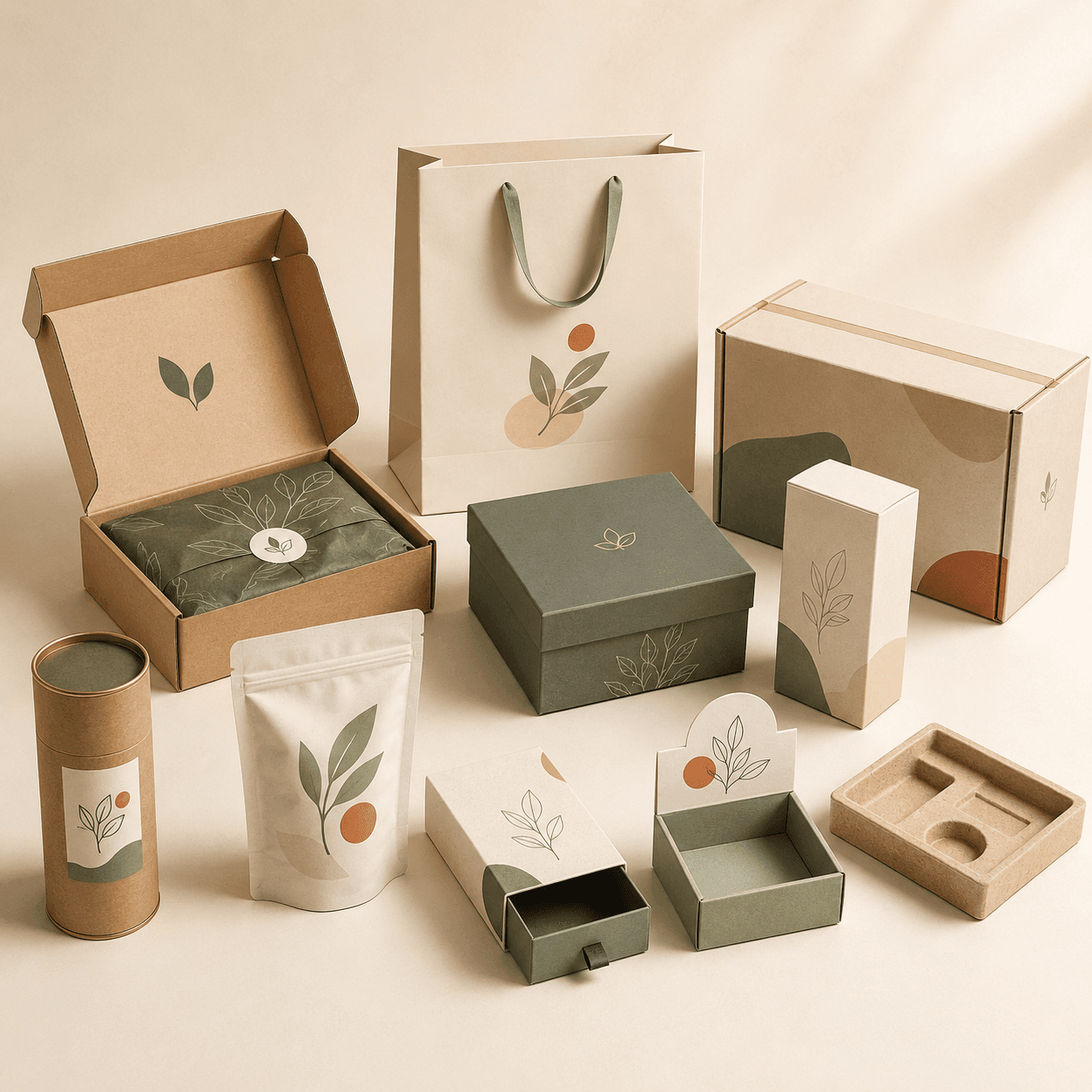
The right packaging style starts with the product journey, not the artwork. Consider what the packaging must protect, how it will be filled, whether it will travel through a courier network and what the customer should see when it opens.
A lightweight retail product may only need a folding carton with clean printed panels. A fragile set may need a rigid box, fitted insert or corrugated outer. Online orders often need a mailer or shipping box that can handle movement without wasting space. Retail displays need a structure that holds products upright and keeps branding visible.
When the structure is still open, Custom Packaging covers the overall production capability. Packaging organised around cosmetics, food, retail, ecommerce, gifts and other product types sits within Industries.
Choosing the structural family first makes later decisions clearer. Material, dimensions, print coverage, finishes and inserts can then support the product rather than compensate for a poor fit.
Corrugated shipping boxes, protective mailers and fitted inserts suit products that face courier handling, stacking or movement inside the carton.
Folding cartons, display boxes, sleeves and window structures give products clear branding, organised placement and visible information at the point of purchase.
Rigid boxes, drawer structures, tubes and tray-and-sleeve designs create a slower opening sequence and keep products arranged for presentation.
Auto-bottom cartons, simple tuck closures and self-seal structures can reduce handling when packaging must be assembled and filled repeatedly.
Shaped boxes, tubes, custom inserts and die-cut structures suit products that do not sit securely inside a standard rectangular carton.
Paper bags, sleeves and lightweight serving structures work where the packaging must be carried, handed across a counter or used immediately.
A packaging structure is easier to choose when the physical requirements are clear. Confirm these points before finalising the style:
The lowest-cost structure is not always the most efficient choice. A slightly stronger carton can reduce product movement, while a simpler fold can save time at the packing table. The useful comparison is total performance, not the box price alone.
A strong visual design cannot rescue the wrong packaging structure. The box or bag must first fit the product, close correctly and handle its intended use.
Once the structure is settled, material and print choices become easier. Folding cartons often suit crisp graphics and efficient flat storage. Corrugated board adds cushioning and stacking strength. Rigid board creates firm walls and a more substantial feel. Kraft surfaces give a natural appearance, while white and coated stocks provide a cleaner base for detailed colour.
Printing can cover the outside, inside or selected panels. Foil, embossing, debossing, spot UV and soft-touch finishes should support the design rather than hide structural weaknesses.
The available materials, printing methods, finishes and inserts are covered under custom packaging customisation. Final choices should account for product weight, handling, artwork coverage and the way the packaging will be opened.
A dieline maps the flat packaging structure before it is cut and folded. It shows the panels, creases, flaps, cut lines, glue areas and artwork boundaries that form the finished package.
Dimensions should be confirmed before design work begins. Even a small change to depth can alter flap length, panel proportions and the position of artwork. Inserts also need enough internal clearance to sit inside the completed structure without distorting the walls.
Use the Dieline Tool to create a starting file for supported structures. More complex closures, shaped packaging and fitted insert systems may need a custom dieline prepared around the product.
Artwork should only be placed after the structure and measurements are stable. This reduces the risk of text crossing a crease, logos sitting too close to cut lines or important design elements disappearing under a flap.
A useful packaging structure should work for the first production run without limiting what happens next. Consider whether the same design system can cover new sizes, product sets, seasonal artwork or larger repeat quantities.
MOQ starts from 50, while production can also support thousands, tens of thousands and planned repeat runs. A starter order may test the structure and presentation. Later production can retain the approved dieline, print placement and finish specifications for greater consistency.
Multiple product sizes do not always need completely different packaging. Shared outer dimensions, adjustable dividers or a controlled set of inserts can sometimes simplify ordering. In other cases, separate dielines give each product a cleaner fit and reduce empty space.
Useful quote details include:
These details give the packaging team enough context to confirm whether the selected structure is practical or whether another option would perform better.
Share your product details, dimensions, quantity and artwork needs. We’ll help choose the right packaging style and send a clear quote.