Paperboard vs Corrugated vs Rigid Boxes: The Short Answer
Choose paperboard when the product is lightweight, self-supporting and mainly needs retail presentation. Choose corrugated when the box must survive courier handling, stacking or heavier loads. Choose rigid when the product is high-value, delicate and the presentation itself helps justify the selling price.
At Custom Packly, I do not start by asking which material looks most premium. I start by asking what the packaging must survive before the customer opens it.
My rules of thumb are simple. For primary retail packaging, start with paperboard unless the product is too heavy or needs true luxury construction. For direct-to-consumer delivery, start with corrugated. For fragile high-value products, consider rigid board plus a fitted insert, then use a corrugated outer when courier protection is still required. If the product is light and already structurally stable, do not pay for strength you do not need.
When the structure is still unclear, choosing custom packaging for your product should start from size, weight, fragility, presentation and delivery conditions rather than appearance alone.
My Four-Step Decision Process
I use a strategic elimination method. The goal is to rule out materials that cannot do the job before spending time on finishes or visual details.
Start with weight and fragility
Paperboard works best for lightweight, self-supporting products such as cosmetics, confectionery, supplements and small retail goods.
Corrugated adds a fluted layer between liners. That creates cushioning, compression strength and resistance to handling, so I move towards it for heavier, fragile or bulky products.
Rigid boxes use dense board, often wrapped in printed or specialty paper. Their stiffness suits delicate high-value products where a folding carton would feel weak or distort under the load.

Map the product’s journey
A retail shelf and a parcel courier ask completely different things from a box.
If the carton sits inside a master shipping case and then goes onto a shelf, paperboard may be ideal. If the same box becomes the shipping vessel, corrugated is usually the safer starting point.
Parcel-delivered products usually need Custom Shipping and Postal Boxes because corrugated board handles compression and handling better.
Match packaging to product value
An A$15 everyday product rarely needs a heavy magnetic rigid box. An A$300 watch in a thin folding carton can create the opposite problem. The packaging makes the product feel less valuable before the customer has even used it.
Rigid packaging therefore needs a commercial reason. It should support product value, fragility, gifting or customer expectation, not simply imitate another premium brand.
Check storage and packing before approval
This is the part many brands miss.
Paperboard and corrugated usually arrive flat. Traditional non-collapsible rigid boxes arrive formed. That changes inbound freight, pallet quantity, warehouse footprint and handling.
A low unit price can also hide expensive assembly. If a warehouse picker spends two minutes folding a complex carton and insert, labour can wipe out the material saving.
The real packaging cost is the box plus freight, storage, assembly and any extra outer packaging.
When Paperboard Is the Best Choice
Paperboard is my default for lightweight retail products because it combines print quality, cost control, shelf efficiency and flat storage.
Common uses include skincare cartons, chocolate boxes, supplement boxes, small accessories and many everyday retail products.
Lightweight retail products often suit Custom Folding Cartons and Tuck Boxes, especially when print area, stacking efficiency and flat storage matter.
Paperboard also has a much higher premium ceiling than many brands assume. A heavy SBS carton can use foil, embossing, spot UV or soft-touch lamination to create a high-end feel without paying for a rigid-board shell.

A separate early decision is whether custom sizing is justified at all. Custom boxes vs stock boxes often comes down to fit, protection, branding and total logistics cost.
Once structure is right, foil, embossing, soft-touch and spot UV can lift perceived value while keeping a folding-carton structure.
The luxury trap
One of the most common mistakes I see is choosing rigid packaging simply because the brand wants to look expensive.
If the product is lightweight, flat and self-supporting, premium paperboard can often create the same commercial impression at far lower structural cost. The money may be better spent on accurate print, a stronger opening sequence, a better insert or one carefully chosen finish.
I move away from paperboard when the product weight stresses the panels, the carton must survive direct parcel delivery or the product needs more crush resistance than a folding carton can realistically provide.
When Corrugated Wins
Corrugated is the strongest all-round choice when protection and logistics matter at the same time.
Fine-flute corrugated is especially useful because it can look far more refined than the brown industrial carton people often picture.
For ecommerce and subscriptions, E-flute is one of my favourite starting points. It is typically around 1.5 mm thick depending on construction, which gives a crisp fold and a good printable surface while still providing useful cushioning.
B-flute is thicker and can suit heavier products, stronger inserts or greater impact protection. C-flute moves further towards shipping and stacking performance.
The exact flute should follow product weight, box size, stacking conditions and handling. I would never select it only because another brand uses it.
Corrugated can replace two boxes
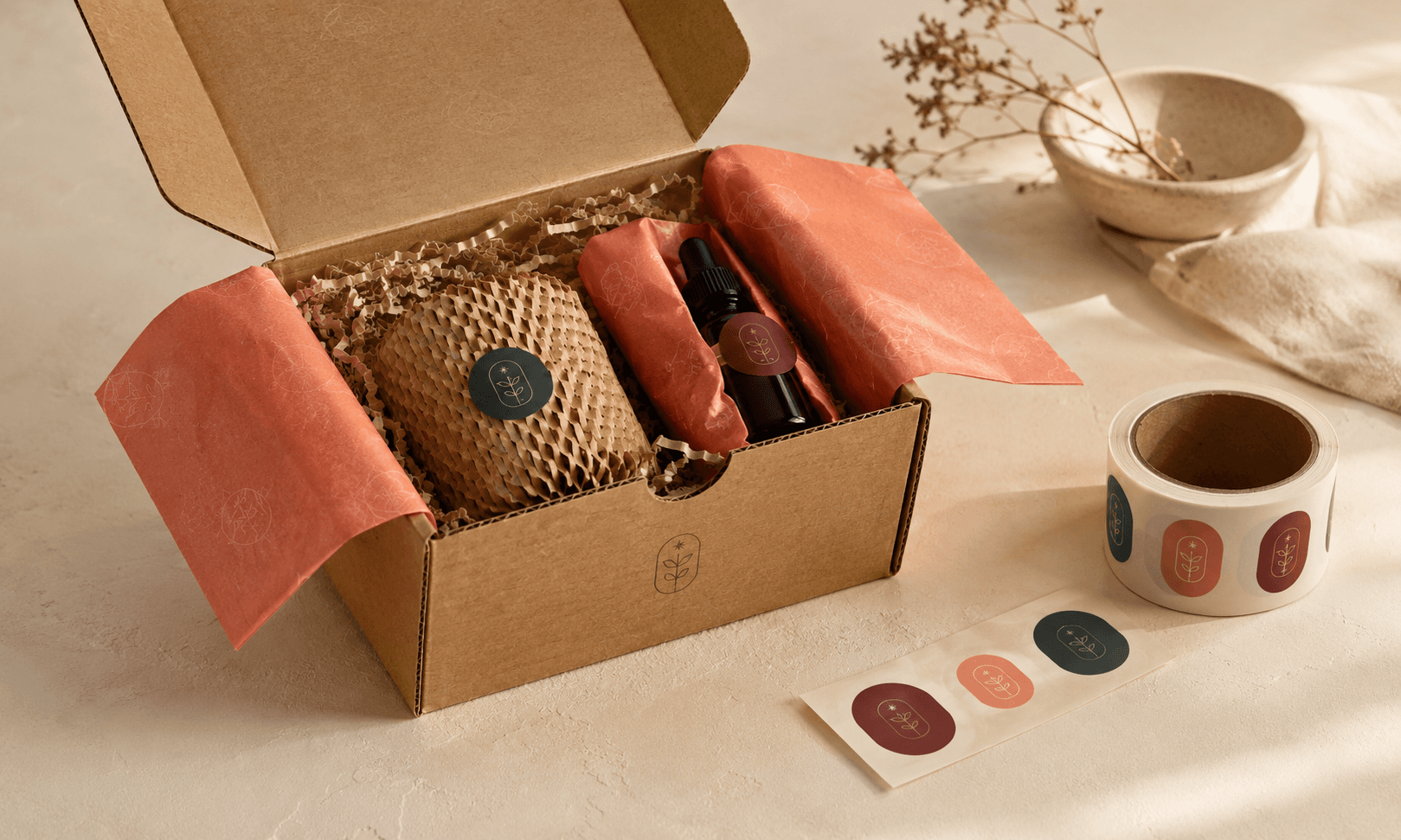
A well-designed printed corrugated mailer can sometimes serve as both the presentation box and the shipping container.
That matters commercially. Instead of buying a decorative inner carton plus a plain outer shipper, the business may be able to use one structure. That can reduce material, packing time, storage complexity and dimensional-weight cost.
The belief that corrugated always looks cheap is outdated. Fine flutes, quality liners, sharp die cutting and controlled printing can create a clean premium result.
Inserts often matter more than thicker walls
A common mistake is strengthening the outer box while leaving the product loose inside.
Movement causes damage.
A fitted insert can stop a bottle, mug or device gaining momentum before it hits a sidewall. In some cases, better internal restraint lets me use a thinner outer board than I would need if the product were moving freely.
Movement inside the box is often better controlled by Custom Inserts and Dividers than by simply increasing outer-board thickness.

When Rigid Boxes Justify the Extra Cost
Rigid boxes earn their premium when the structure is part of the product experience.
I normally consider rigid board for luxury cosmetics, jewellery, watches, premium electronics, corporate gifts and high-value sets.
High-value presentation projects often justify Custom Rigid Boxes when tactile feel and structural stiffness are part of the product experience.
But rigid is expensive for reasons that go beyond board cost. Traditional rigid construction is labour-heavy, uses more material and consumes warehouse space before the product even goes inside.
For ecommerce, the presentation box may also need a corrugated outer carton to protect wrapped surfaces from scuffs, dents and dirt.

My rough product-value rule
I use product price as a signal, not a law.
For products under roughly A$50 retail, rigid packaging is usually hard to justify unless the margin is unusually high or gifting is central to the offer.
Between about A$50 and A$100, I look closely at margin, fragility and customer expectation.
Above roughly A$100, rigid becomes easier to justify for products such as premium fragrance, watches, jewellery and high-end electronics.
Those thresholds are working rules, not universal accounting standards. A high-value commodity may still belong in corrugated, while a lower-priced limited gift can justify rigid if the economics support it.
Three Packaging Decisions I Would Make Again
The differences become clearer when the first idea and the final recommendation are not the same.
Luxury skincare: paperboard to rigid
A premium organic facial serum came in a heavy custom glass dropper bottle.
The brand first wanted a thick folding carton because it kept the unit cost and shelf footprint down. The problem was that the bottle felt too heavy for the carton. The board risked warping and the overall presentation did not match the price of the product.
I recommended a two-piece rigid box using an 80pt greyboard core, about 2 mm thick. A high-density EVA foam insert covered in black velvet held the bottle firmly in position.
That solved the structural weakness and transformed the opening experience. For a high-ticket cosmetic in a heavy fragile container, I would make the same choice again.
Coffee subscription: oversized shipper to E-flute mailer
A monthly coffee subscription included three bags of whole beans, a ceramic mug and an information booklet.
The business was using an oversized regular slotted corrugated carton filled with bubble wrap and loose packing material. It looked chaotic, wasted space and increased dimensional-weight charges.
I recommended a custom front-lock E-flute corrugated mailer. A die-cut B-flute corrugated insert isolated the ceramic mug from the coffee bags.
The new box reduced empty space, removed loose plastic void-fill and gave each item a deliberate position when the lid opened.
This is exactly where corrugated shines. It can solve shipping, product restraint and presentation in one structure.
Premium chocolate: rigid considered, paperboard chosen
An artisan chocolate maker wanted to package four premium bean-to-bar slabs wrapped in aluminium foil.
A rigid drawer box looked attractive, but the chocolate was lightweight, flat and self-supporting. Rigid board had no structural problem to solve.
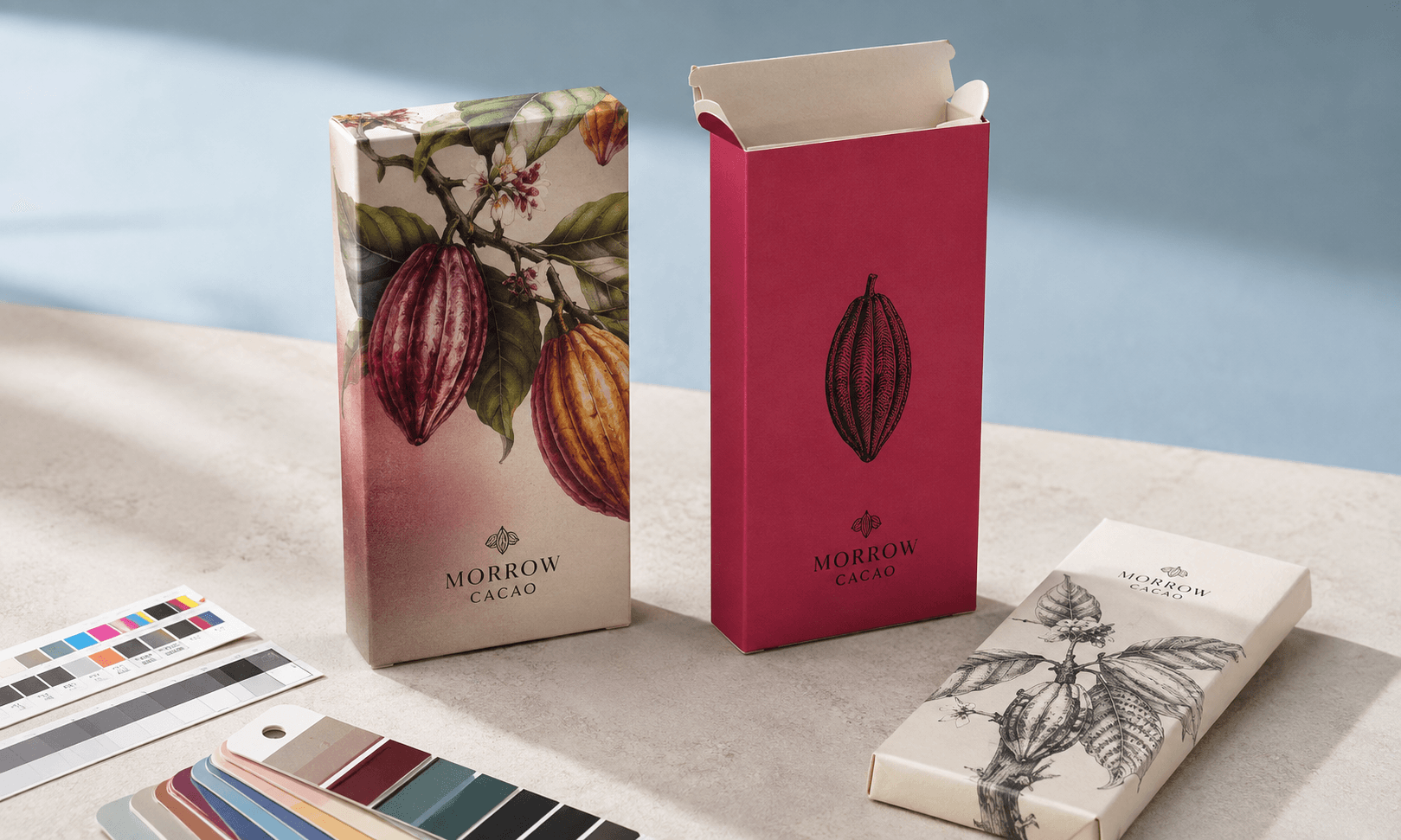
I recommended an 18pt SBS folding carton, about 0.46 mm thick, paired with a custom sleeve. A simple paperboard divider kept the bars separated. Embossing and spot UV added the premium cues.
The result stayed giftable while reducing cost and storage demand.
If the product is lightweight and structurally stable, premium paperboard often gives a better return than rigid board.

The Hidden Costs That Change the Decision
Comparing unit prices alone can lead to the wrong material choice.
Rigid boxes can make you pay to store air
Traditional non-collapsible rigid boxes occupy nearly the same cubic volume when empty as when packed.
Paperboard and corrugated arrive flat, so thousands of units can fit into a relatively compact pallet footprint. Rigid boxes can require several times more storage volume.
That difference can increase inbound freight, 3PL charges and warehouse requirements.
Collapsible rigid constructions can reduce the problem, but they create different assembly and cost trade-offs. They should be assessed separately.
Cheap material can create expensive labour
A lower-cost carton can lose its advantage if the packing team spends too long assembling it.
Before approving a structure, I want to know how many folds and locks are required, whether the insert arrives flat, whether one person can assemble it consistently, whether the product drops into position easily, whether extra tape or void-fill is still needed and how much space the packaging occupies before use.
If assembly is slow, the labour cost can be more important than a small per-unit saving.
Scale changes per-unit economics
Paperboard and corrugated benefit strongly from volume because cutting dies, print setup and other fixed costs are spread across more units.
Traditional production economics often become much more attractive as quantities move into the thousands, but that does not mean a brand must begin there. Custom Packly supports MOQ from 50 as well as larger production runs and repeat orders.
Once structure is fixed, Customisation can refine colour, finish, material and print choices.

The Mistakes That Cost Brands Most
Choosing appearance before strength
A delicate carton may look perfect on screen but still be wrong for a heavy product.
If panels bow, the base strains or the tuck closure carries too much load, artwork cannot rescue the structure.
Start with physical requirements, then design the appearance.
Assuming rigid automatically means luxury
A well-proportioned folding carton using quality board and one or two strong finishes can feel more considered than an oversized magnetic box.
Luxury comes from structure, print control, tactile detail and the opening sequence, not board thickness alone.
Assuming corrugated looks cheap
This mistake is particularly costly for ecommerce brands.
Fine-flute corrugated can be sharply printed and cleanly die cut, then arrive flat and become the shipping container. That operational advantage is difficult for traditional rigid packaging to match.
Forgetting the product can move
Outer strength is only one part of protection.
If two glass bottles can collide, a thicker wall does not fix the core problem. Hold the product in position first, then specify the outer board.
Ignoring packaging-to-product value
My working benchmark is to keep total packaging spend around 3% to 7% of the retail selling price for many consumer products.
Everyday goods normally belong towards the lower end. High-margin luxury products can justify more.
I use that percentage as a planning benchmark, not a universal industry rule. Margin, breakage risk, returns, customer expectation and repeat purchase can all justify moving outside it.
What I Would Choose for Different Products
There is no universal winner, but there should be a clear first choice.
Skincare and cosmetics
Start with paperboard for jars, tubes and lightweight bottles.
Move to rigid for expensive heavy glass packaging. Move to corrugated when several products are shipped together as an ecommerce set.
Jewellery and watches
Start with rigid for premium jewellery and watches.
For low-priced fashion jewellery, thick paperboard often makes more commercial sense. Foil, a drawer-style opening or a shaped carton can still create a polished result.
Electronics
Use rigid for premium small electronics where presentation is central.
Use corrugated for larger, heavier or more price-sensitive products such as routers, keyboards and accessories. An E-flute or B-flute box plus a structural insert can protect them more efficiently.
Food and confectionery
Start with paperboard for lightweight retail products, provided the board and any barrier treatment are suitable for the specific food-contact use.
Heavy jars move towards corrugated. Premium gifting can justify rigid when presentation supports the selling price.
Clothing and fashion accessories
Paperboard works well for retail apparel. Corrugated mailers make more sense for direct delivery.
Luxury wallets, belts or scarves can justify rigid packaging when the tactile presentation supports the product value.
Ecommerce and subscriptions
Start with corrugated.
For most courier-delivered products, there is little reason to ask a rigid presentation box to perform as the shipping container. A premium item can still use rigid as the inner box, protected by corrugated outside.
Custom projects that need a box designed around exact dimensions sit naturally under Custom Boxes, where structure, fit and presentation can be specified together.
E-flute corrugated mailers are also my default for subscription boxes because they balance print area, protection, flat storage and a clean opening.
Corporate gifts
Rigid magnetic or lift-off lid boxes work well when gift value and presentation justify them.
If hundreds of sets need to move flat for local assembly, or the budget is tight, a premium corrugated mailer can be the smarter choice.
My Strongest Opinion: Magnetic Rigid Boxes Are Overused in Ecommerce
The magnetic rigid box is one of the most overused packaging choices in modern ecommerce.
Many founders see premium electronics packaging and assume a heavy board, magnetic flap and slow reveal are what make packaging feel expensive.
Then logistics enters the picture.
A traditional rigid box often arrives formed, consumes warehouse space and still needs corrugated protection before entering a parcel network. The business ends up paying for two boxes, more storage and more dimensional volume.
For many web-to-doorstep products, I would choose a sharply designed E-flute corrugated mailer instead. Good printing, disciplined colour, a clean opening and a fitted insert can still create an excellent unboxing experience.

The key difference is that the mailer can arrive flat and act as the shipping-ready structure.
I do not ask whether rigid looks better in a product photograph. I ask whether it still looks like the best decision after freight, storage, assembly and courier protection are included.
Five Questions to Ask Before You Choose
Before specifying paperboard, corrugated or rigid board, answer these five questions:
Those answers usually eliminate at least one material.
If the product is light, shelf-based and stable, start with paperboard.
If the box must survive delivery, start with corrugated.
If the product is expensive, delicate and presentation is part of what the customer is paying for, consider rigid.
The right box is not the one that looks most expensive. It is the one that protects the product, fits the journey, supports the selling price and remains practical to store and pack.
Send product dimensions, weight, quantity, delivery use and artwork status when you request a packaging quote. That gives us the information needed to narrow the structure, board and insert requirements before production decisions are locked in.