Skip to content
Details

Custom Brownie Boxes

Turn dense slices and topped brownie assortments into neat counter, gift and delivery orders with grease-aware board, firm bases and fitted dividers.

Free Design Support

Clear Pricing

Flexible Quantities

Unlimited Customization

Premium Materials

Offset Precision

Free Shipping

Quick Turnaround

Custom Brownie Boxes for Dense Slices, Slabs and Gift Assortments

Custom Brownie Boxes should support the weight of dense slices, reduce visible grease marks and keep toppings from rubbing against the lid or neighbouring pieces. The best structure starts with the finished brownie size, not the baking tin, because cutting, fillings and decoration change the space each portion needs.

A single fudgy square sold at the counter needs a compact carton that opens cleanly. A twelve-piece gift order needs a firm base, stable rows and clear flavour identification. Brownie slabs, layered blondies and topped pieces may also need extra height or a liner that keeps the food away from printed surfaces.

Custom Brownie Boxes can sit within Custom Bakery and Confectionery Packaging so the bakery can use one visual identity across everyday slices, celebration orders and seasonal sweets without giving every product the same internal layout.
Size the Base from the Finished Brownie

Custom Brownie Boxes fit more accurately when measurements come from a cooled, cut and decorated product. Brownies can shrink after baking, gain width through toppings or vary at the edges. Measure several finished portions before setting the carton.

Allow for the cut edge and paper liner

Record the length, width and full height of each portion. Include ganache, caramel, nuts, biscuit pieces or piped decoration. Where brownies sit in baking paper, include the folded paper because it can increase the footprint and catch on tight dividers.

Custom Brownie Boxes need a little working space so staff can load brownies without scraping soft edges. Too much space lets dense pieces slide and strike each other.

Match the layout to the portion count

Single and two-piece Custom Brownie Boxes suit counter purchases, favours and tasting orders. Four, six and twelve-piece layouts work well for mixed gifts, office orders and events.

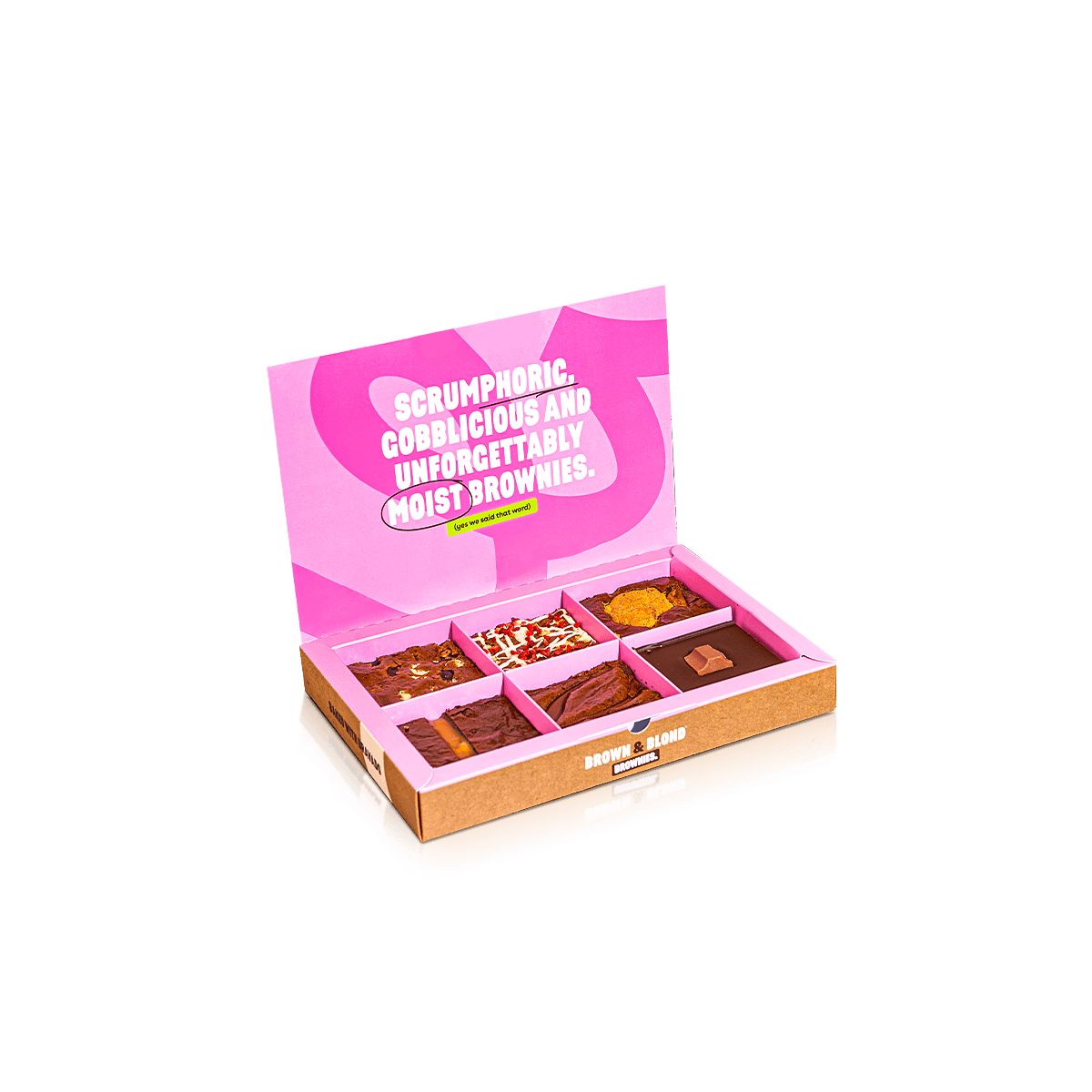
The internal grid in Custom Brownie Boxes should follow the real portion size and cutting pattern. A three-by-two layout may give staff better access than one long row, while a shallow tray may suit a brownie slab that will be cut later.

Plan for squares, fingers and full slabs

Square brownies, long brownie fingers and whole slabs place weight in different areas. Long Custom Brownie Boxes need support beneath the full length of each piece so the centre does not sag. A slab box needs a base that stays flat when lifted from two sides.

When more than one portion shape is sold, separate outer sizes often work better than one oversized carton filled with loose paper.

Keep Grease and Moisture Marks Under Control

Custom Brownie Boxes need material choices that account for butter, chocolate and fillings. A clean outer carton can quickly look untidy when oil moves through an unprotected paper surface.

Separate direct contact from the printed carton

Use a suitable liner, tray or food-contact barrier where the brownie would otherwise touch printed board. The exact choice depends on the recipe, serving time and how long the product remains in the box.

In Custom Brownie Boxes, a liner can also make removal cleaner because customers lift the brownie without pressing their fingers against the carton walls.

Choose materials for the filled weight

White paperboard gives detailed artwork and clean colour for counter and gift orders. Kraft can create a simpler natural look, though printed colours will appear different from those on white stock.

Corrugated board may suit heavier multi-piece orders or the outer delivery carton. The chosen stock should keep the base level without making a small single-brownie box unnecessarily bulky.

Choose coatings for the actual recipe

Material planning for Custom Brownie Boxes should account for the fact that a plain cakey brownie may behave differently from a dense fudgy piece with caramel or chocolate ganache. Share the richest recipe when discussing material suitability rather than testing only the driest product.

The inner surface should suit the intended food contact and resist the level of oil or moisture expected during normal use. Outer decorative finishes should not be treated as a substitute for a suitable inner barrier.

Keep crumbs away from presentation panels

Custom Brownie Boxes can collect loose crumbs around windows, corners and sleeve openings. A removable tray or neatly folded liner can keep the display cleaner and help staff wipe the counter without handling the printed carton.

Stop Toppings and Corners from Rubbing

Dense brownies do not always crush easily, but corners, toppings and soft layers can still mark each other. Custom Brownie Boxes should control sideways movement while leaving enough room for clean removal.

Use dividers for mixed flavours

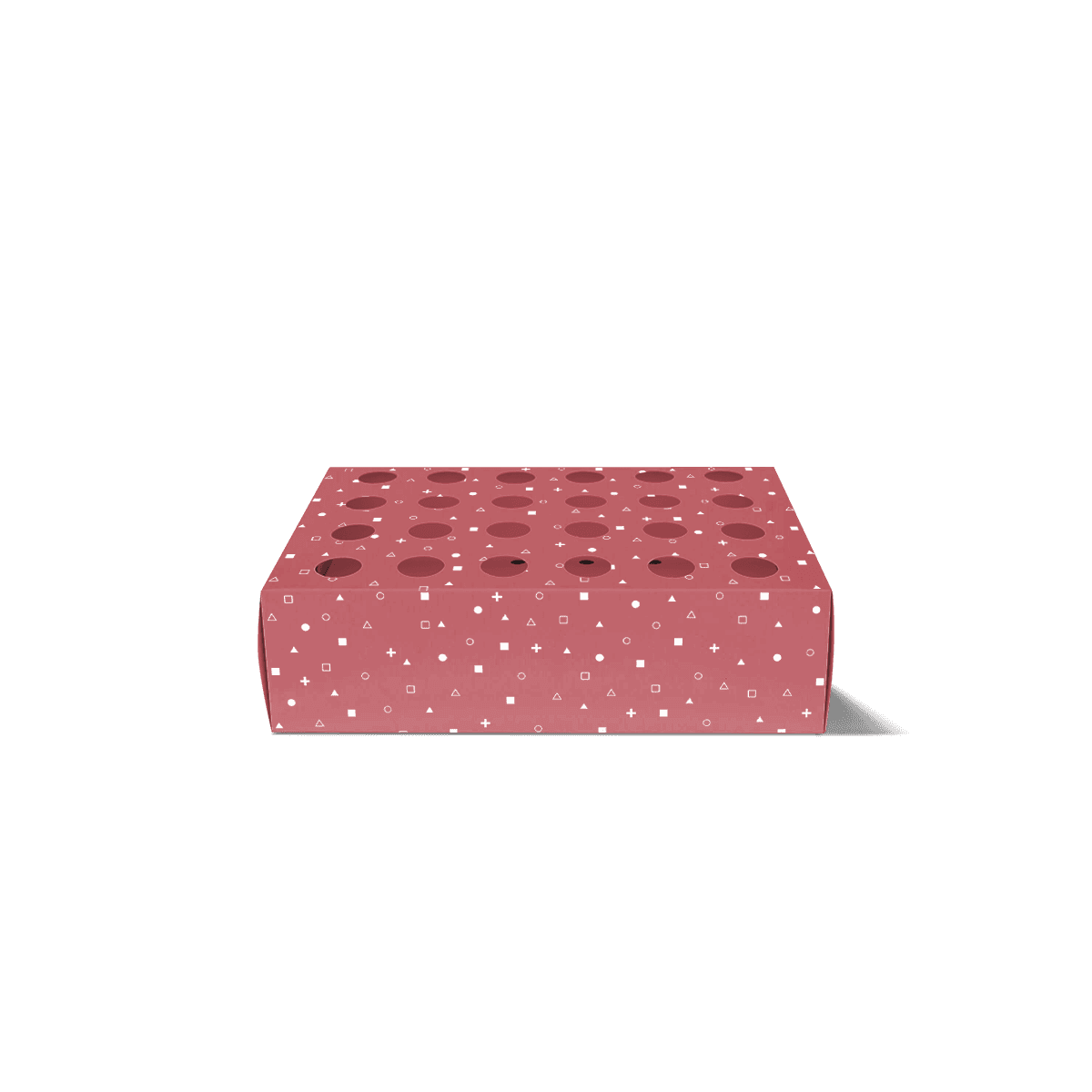
Cardboard dividers help separate flavours, toppings and dietary variations. The cells should follow the largest brownie in the assortment, not the smallest.

For Custom Brownie Boxes containing salted caramel, walnut and iced brownies, a divider can stop sticky toppings transferring to neighbouring pieces. It also keeps the arrangement neat after the box has been carried.

Support tall and layered brownies

Brownies topped with frosting, cookie pieces or chocolate bars need extra lid clearance. Measure the height from the base of the liner to the highest decoration.

Layered brownie sandwiches may need wider cells because pressure on the sides can push the filling out. A loose lid is not the answer. The carton still needs a closure that stays secure.

Avoid stacking without a firm layer

Two-layer Custom Brownie Boxes can increase the count without making the footprint wider, but brownies should not sit directly on one another. Use a firm layer pad and enough headroom for the lower row.

Staff should be able to remove the upper layer without tipping crumbs or pressing it into the brownies below.

A mixed-flavour fit example

Consider six brownies cut to the same width but finished with different toppings. Plain pieces sit lower than brownies topped with ganache and biscuit pieces.

Using one shallow cavity may allow the decorated pieces to touch the lid. A better layout keeps the same base grid, adds suitable height and places a divider between sticky and plain portions. Staff can then load the order in a set sequence without changing the outer footprint.

Choose an Opening That Suits Bakery Service

The opening style affects how quickly staff can load Custom Brownie Boxes and how customers remove the first piece. A structure that looks attractive but slows down every counter order may not suit daily use.

Four-corner trays for quick loading

Four-corner Custom Brownie Boxes give open access while brownies are arranged, then close with a lid or cover. They work well for mixed portions, gift assortments and larger quantities because staff can place each piece from above.

Custom Four Corner Carton Boxes can provide a firm tray shape when the base needs to carry several dense brownies without folding inward.

Sleeves for a neat gift reveal

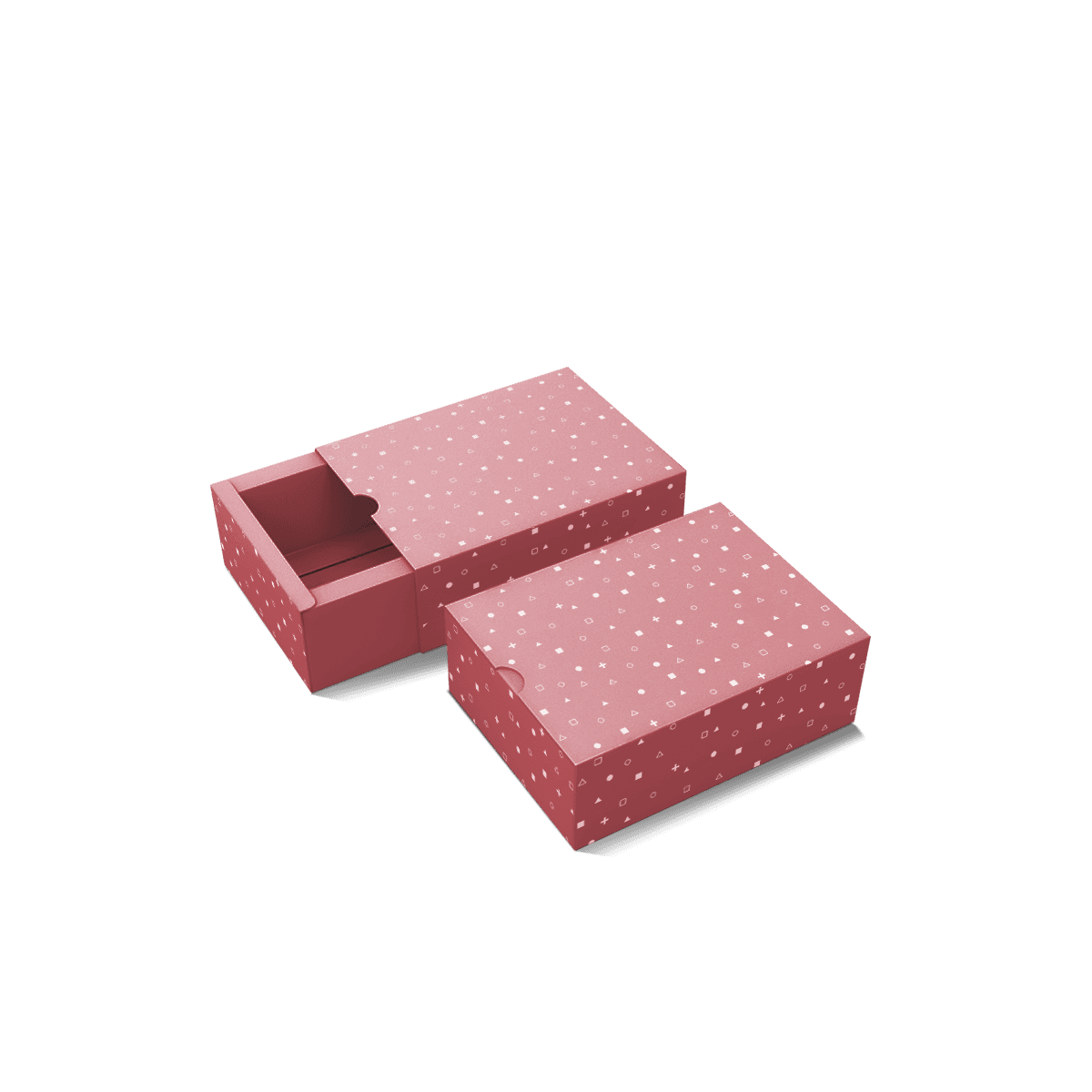
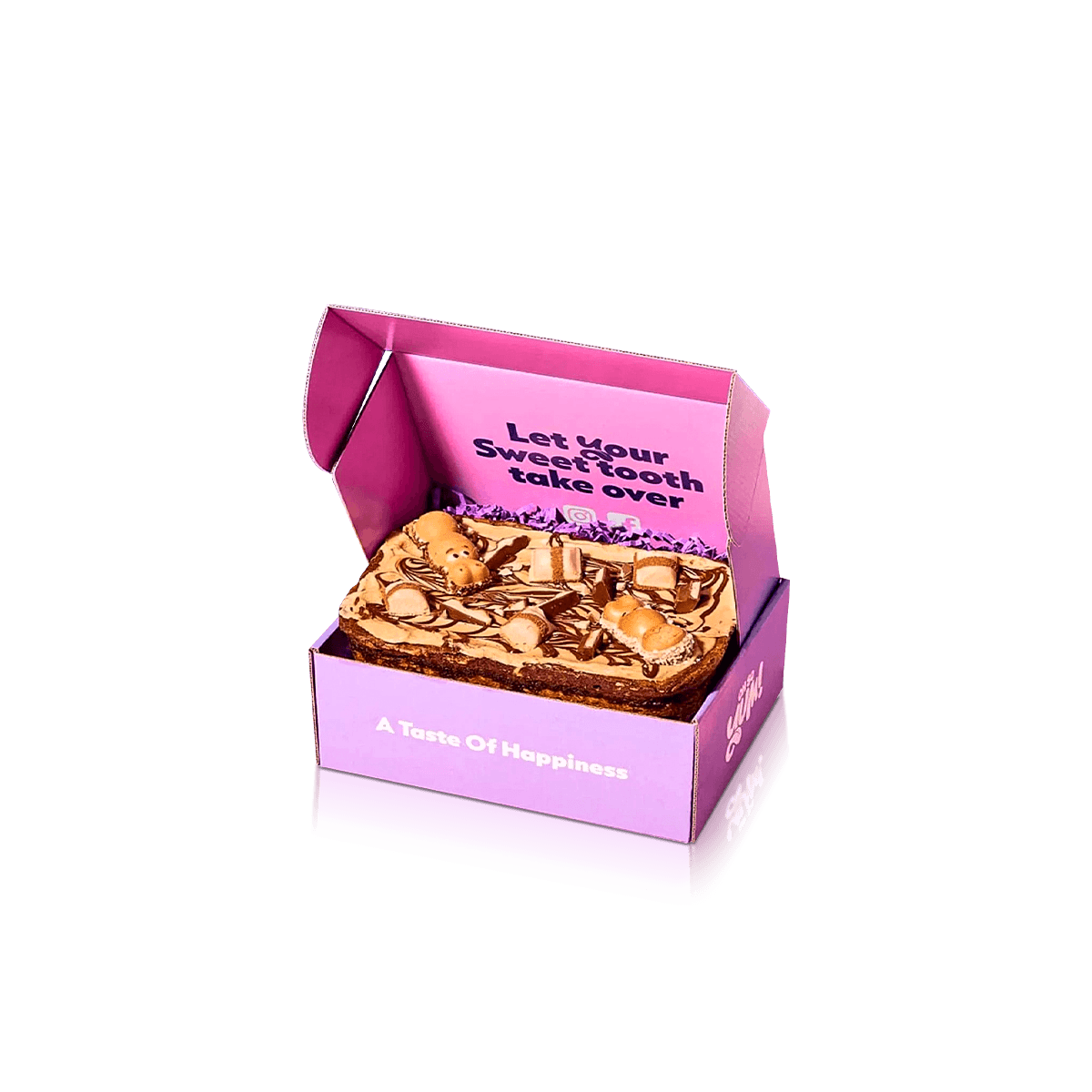
A tray and sleeve can hide the insert, carry most of the artwork and create a controlled reveal. The sleeve should slide without pulling the tray suddenly or rubbing against raised toppings.

Custom Sleeve and Band Packaging can also help a bakery use a simpler food-contact tray with a branded outer layer for events or seasonal artwork.

Tuck cartons for single portions

Custom Brownie Boxes for singles and pairs can use compact tuck cartons that arrive flat and assemble quickly. The opening should be wide enough for the liner to pass without catching.

A front thumb cut or side opening can make removal easier, especially when the brownie fits closely.

Use Windows Without Showing Grease or Empty Space

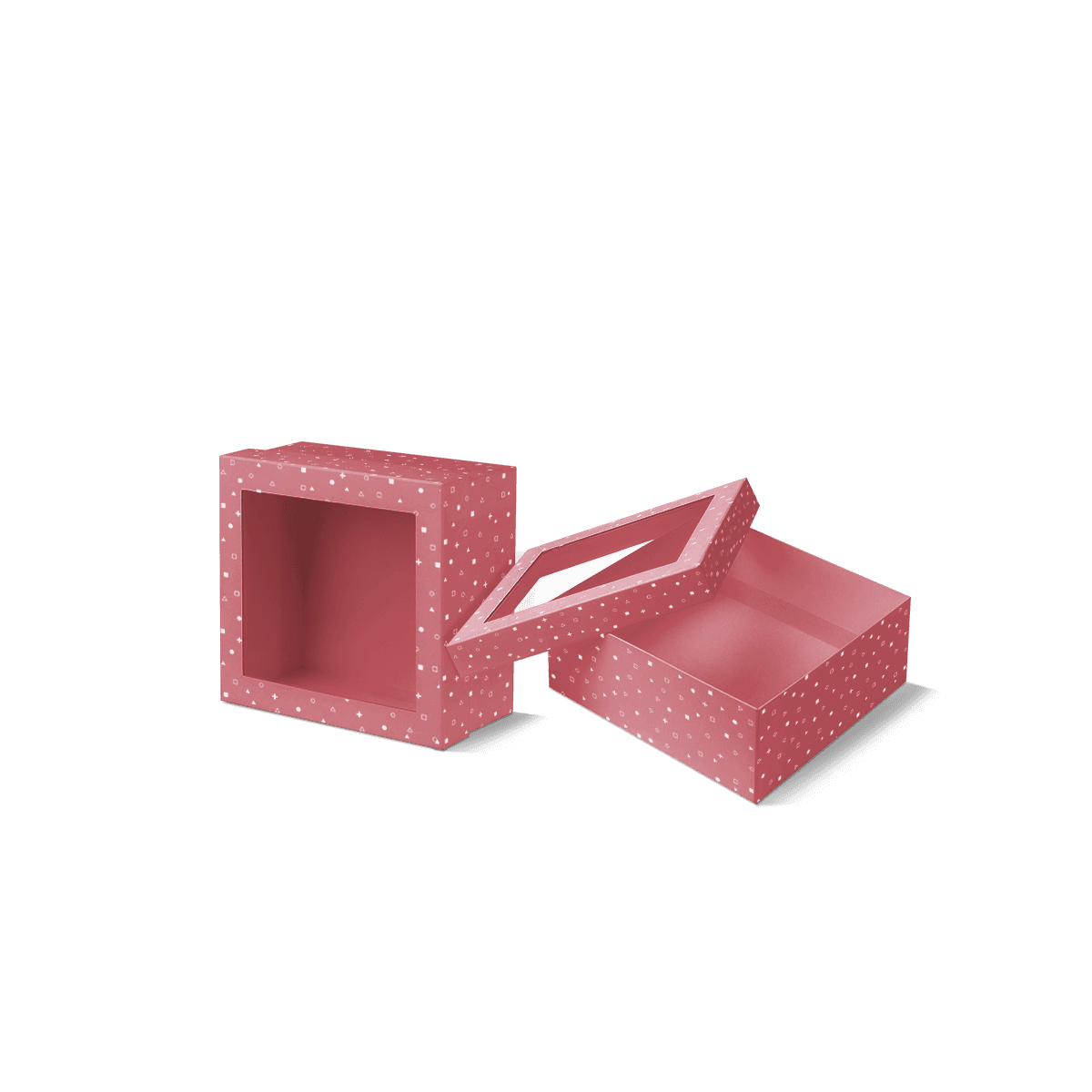
A well-positioned window can show texture, toppings and portion count. Custom Brownie Boxes need the window aligned with the food once the liner and divider are in place.

Frame the strongest product view

Windowed Custom Brownie Boxes suit rows of decorated brownies when the opening follows the layout. A smaller corner window can reveal colour and texture while leaving more room for branding and labels.

Avoid placing the opening over wide gaps between portions. The box should look full and ordered from the normal viewing angle.

Leave a strong border around the cutout

The remaining board around the window supports the lid. A very large opening can make a wide box flex when lifted.

The border also provides space for flavour names, a logo or a short gift message without crowding the clear panel.

Keep toppings below the window film

Chocolate shards, sprinkles and piped icing should not touch the clear patch. Contact can smear the window and spoil the first view.

Confirm the highest topping and allow for normal variation between batches before finalising lid depth.

Turn Portion Labels into Part of the Design

Custom Brownie Boxes often hold several flavours that look similar from above. Clear label planning helps staff hand over the correct order and helps customers identify each piece without touching it.

Reserve space for flavour and dietary details

Leave a calm panel for flavour names, required food information, reheating notes or a best-before label. The label should not cover the window, closure or main logo.

A printed flavour key inside the lid can work for a fixed assortment. Removable cards or stickers give more freedom when the menu changes often.

Use print to separate everyday and gift orders

Everyday Custom Brownie Boxes may need a strong logo, simple pattern and clear label zone. Gift orders can use an outer sleeve, foil detail or event message without changing the inner tray.

Customisation can bring board, print, window and finish decisions together before artwork is approved.

Place artwork around folds and handling points

Keep small text away from corners, locking tabs and sleeve edges. Staff may also place their fingers under the box at the same point on every order, so avoid putting a delicate foil detail where it will receive constant rubbing.

Plan Brownie Boxes for Counter, Event and Delivery Use

The same brownie may need different outer protection depending on how it reaches the customer. Custom Brownie Boxes used for counter collection do not face the same movement as boxes sent through a courier network.

Counter collection

Counter orders need fast assembly, a clean handover and a base that stays level. Staff should be able to check the flavour label without opening the box.

A fitted paper bag can support larger orders, but the brownie carton still needs enough stiffness to remain flat.

Weddings and corporate gifting

Event orders may use single portions, pairs or mixed trays. Personal names are often easier to add with labels or cards than separate print runs.

Custom Chocolate Boxes can share colours and finish details when a corporate gift combines brownies with truffles or other confectionery, while each product keeps its own insert.

Local delivery and postal orders

For local delivery, the inner brownie box may sit inside a stronger outer carton with cushioning. Postal orders need more than an attractive gift carton because repeated movement can shift heavy portions.

Consider the full shipping system, product temperature and any cooling material required. Test the filled order over the same distance and in the same orientation it will normally travel.

Keep Quantities Practical Across Flavours and Seasons

Custom Brownie Boxes become easier to reorder when the bakery separates permanent structure decisions from short-term artwork. A standard tray can support several flavour collections through labels, sleeves or cards.

MOQ starts from 50, with support for larger event runs, repeat orders and high-volume production. Order planning should consider how often each portion count sells, how much flat or assembled stock can be stored and which designs are tied to a short date.

For a seasonal collection, keep the core box neutral and place campaign artwork on a sleeve. For a signature assortment sold all year, direct printing may give a cleaner result and reduce extra packing steps.

Recheck the fit when the recipe changes. A thicker topping, larger cut size or new liner can affect divider spacing even when the advertised count stays the same.

Quote the Brownie as It Is Sold

An accurate quote for Custom Brownie Boxes needs the finished brownie measurements, portion count and intended handover method. Quoting from the baking tray alone can produce a box that is too tight after cutting and decorating.

Send these details:

  • Finished length, width and full height of each brownie
  • Shape, such as square, finger, slab or layered sandwich
  • Number of pieces in each box
  • Normal variation between portions
  • Liner, tray or direct-contact requirement
  • Divider layout for mixed assortments
  • Window, sleeve, lid or tuck opening preference
  • Total filled weight for larger boxes
  • Print coverage, label area and finish ideas
  • Quantity for each size and artwork version
  • Counter, event, local delivery or postal use
  • Required date and current artwork status

A clear top and side photo beside a ruler can show toppings and liner folds that measurements miss. A 3D mockup is usually enough to approve artwork and panel order. A physical sample is most useful when the brownie is unusually oily, the divider fit is tight or the filled box is heavy.

Send the finished product details through Get a Quote. Custom Packly can then price the base, liner or divider, closure, window and print as one working specification.

FAQs

Use a suitable liner, tray or food-contact barrier between the brownie and printed board. The right choice depends on the recipe, topping and expected time inside the carton.

Dividers are useful when several dense or sticky pieces share one box. They reduce sideways movement and stop toppings or cut edges from rubbing against each other.

Yes, when the pieces have similar finished dimensions and weight. Different toppings or fillings may still need separate cells, labels or liners.

A physical test is useful when the order contains heavy portions, stacked layers, soft toppings or tight dividers. It helps confirm the inner arrangement and outer shipping protection together.

Process

How it works

Simple steps from idea to delivery

01

Tell Us Your Specs

Custom packaging boxes

Tell Us Your Specs

Provide size, quantity, printing, and finishes.

02

Get a Fast Quote

Custom packaging boxes

Get a Fast Quote

Instant transparent pricing, no hidden fees.

03

Design and Approval

Custom packaging boxes

Design and Approval

Artwork checks, revisions, and final sign-off.

04

Produce

Custom packaging boxes

Produce

Expert manufacturing to meet deadlines.

05

Ship to Your Door

Custom packaging boxes

Ship to Your Door

Hassle-free, flexible delivery options.

Start Your Custom Packaging Quote

Share your product details, dimensions, quantity and artwork needs. We’ll help choose the right packaging style and send a clear quote.