300 vs 350 vs 400 GSM Cardboard: The Short Answer
For most small retail folding cartons, 300 GSM is a sensible material to assess first. Move to 350 GSM when the carton needs better panel stability, has a taller shape or must hold a product that puts more pressure on its folds and base. Consider 400 GSM for larger presentation cartons or designs with broad unsupported panels, but only after checking how the chosen board folds and performs.
Those are starting points, not weight limits. A well-designed 300 GSM carton made from a high-stiffness board can outperform a poorly chosen 350 GSM carton. A 400 GSM box may still buckle, spring open or arrive damaged if its dimensions and structure are wrong.
My advice is to choose the lightest board that meets the performance requirement, then spend the remaining budget where it changes the result: product fit, reliable closures, clean printing and protection where needed.
What Does GSM Actually Tell You?
GSM means grams per square metre. A sheet of 300 GSM board weighs 300 grams per square metre, while an equally sized sheet of 400 GSM weighs 400 grams. It describes material mass per area, not a guaranteed box strength.
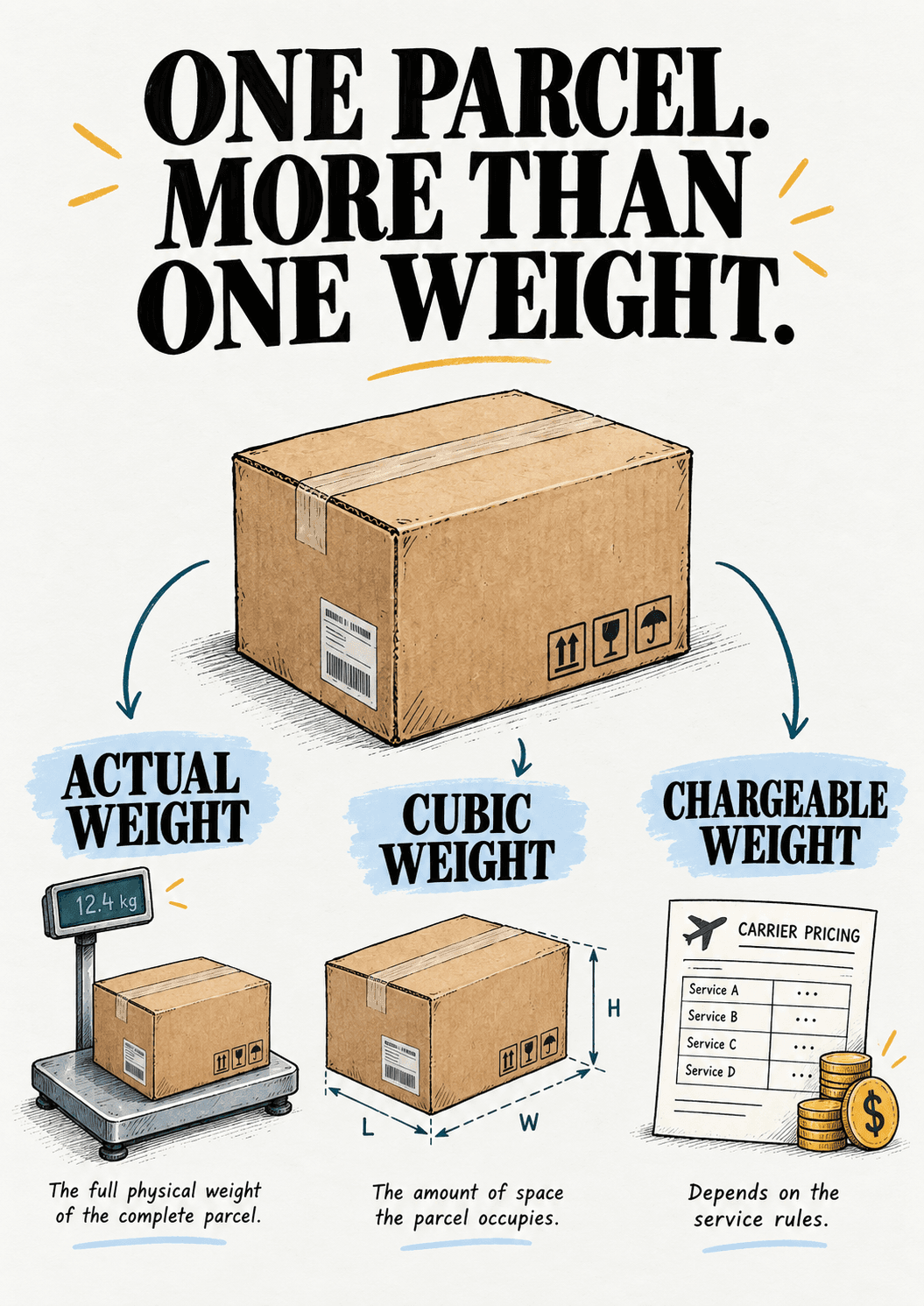
A box buyer needs to separate three measurements:
Two 350 GSM boards can have different thicknesses and feel quite different when folded. Fibre type, the number of plies, density, moisture and coatings all affect the result. Board makers such as Metsä Board even manufacture high-bulk folding boxboard designed to achieve stiffness without simply adding more weight.

This is where I would challenge a common supplier recommendation: "Use 400 GSM because it is premium" is not a complete specification. I would ask which 400 GSM board, what its caliper is and whether a converted sample holds the actual product.
The distinction between paperboard, corrugated and rigid boxes matters too. GSM choices here refer mainly to solid paperboard used in folding cartons, not the strength rating of a corrugated shipping box or the thickness of wrapped rigid board.
How 300, 350 and 400 GSM Usually Compare
300 GSM: A practical starting point for compact retail cartons
I would start by testing 300 GSM for small, self-supporting products: a tube of cream, a lipstick, a soap bar in an inner wrap or a lightweight accessory. When the carton is narrow, has short panels and is protected during delivery by another shipping box, heavier board may add cost without improving the customer's experience.
The risk appears when the design grows. A tall carton may bow on its front panel, particularly if the product can move inside. A weak tuck or unsupported base may also matter more than an extra 50 GSM.
Do not approve 300 GSM only because the product feels light in your hand. Assess the complete carton dimensions, fold quality and how customers handle the box.
350 GSM: A useful middle option when the carton needs more body
350 GSM often deserves a place in a sample comparison for medium-sized cosmetics, giftable retail products and cartons with taller front panels. It can offer a firmer feel than a lighter version of the same board grade without pushing every design towards the heaviest option.
But "350 GSM" does not automatically mean "strong enough for a candle jar". A glass jar concentrates weight at the bottom, and the closure mechanism and internal fit may determine whether the packaging works.
When 300 GSM looks slightly soft but 400 GSM feels unnecessarily rigid at the creases, I would test 350 GSM next rather than redesign the entire box immediately.
400 GSM: Worth testing when larger panels need support
400 GSM can be useful for larger premium folding cartons, substantial retail presentation boxes and designs that need a firmer hand feel. The advantage is most likely to matter when the exact board grade provides a meaningful increase in panel stiffness.
The trade-off is conversion. A thicker or denser board may require different creasing settings. Tight flaps and narrow folds can become harder to close, and decorative coatings can make poor crease design more visible.
I would not prescribe 400 GSM for fragile products simply because they are fragile. Material weight cannot replace a fitted insert or a protective shipping carton.

Why Box Size Can Matter More Than an Extra 50 GSM
Imagine two cartons made from the same 350 GSM paperboard. One is a compact lipstick box. The other is a tall, broad-fronted box for a skincare set.
The material specification is identical, but the second carton has more unsupported area. Its front panel can flex, its corners may be easier to distort and its contents may create leverage against the folds. The larger design needs a fresh structural assessment, not automatic approval from the small-carton sample.

This is why the folding cartons and tuck boxes you select should be specified alongside the material. Flap depth, glue-tab placement, base design and the location of score lines determine how the board behaves once it becomes a box.
A stronger bottom structure can sometimes solve a loading problem more effectively than moving from 350 to 400 GSM. The practical differences between tuck end, snap lock and auto lock boxes become particularly relevant when assembly speed and the product's weight act on the base.
Not All Cardboard Grades Feel the Same
A quote that lists only "350 GSM cardboard" leaves out important details. Three commonly discussed folding-carton materials are:
Solid bleached board for a smooth printed surface
Solid bleached board, often called SBS or SBB depending on the supplier's terminology, is used where a white surface, fine artwork and consistent presentation matter. It can suit beauty packaging, but its actual stiffness and caliper depend on the mill grade.
Folding boxboard for stiffness at a controlled weight
Folding boxboard (FBB) typically uses several fibre layers, often including a bulkier middle layer. That construction can provide good thickness and stiffness at a lower grammage than a denser alternative. It is a good reason not to rank every board on GSM alone.
Recycled and kraft-backed boards for different priorities
Recycled duplex boards and kraft-backed options bring different reverse-side colours, finishes, stiffness characteristics and print considerations. A grey reverse may be fine inside a functional carton but unsuitable for a design where customers see the interior. Natural kraft surfaces can also change how ink colours appear.
None of these names guarantees a specific outcome. Ask for a named grade and a physical example. The customisation options should be decided against the chosen substrate rather than artwork created around an assumed material.

Folding, Printing and Finishing Can Change the Decision
Creases must suit the board, not just the drawing
Paperboard bends differently with and across its fibre direction. A folding-carton manufacturer therefore needs to consider grain direction, crease width and depth as well as material thickness.
A heavier stock with an unsuitable crease can produce a flap that resists closing or a printed edge that cracks when folded. For a narrow tuck carton, that problem may outweigh the benefit of a firmer front panel.
Ask for an erected sample with the actual board grade. Open and close it repeatedly, press lightly on the corners and inspect the score lines under good light. A flat board swatch will not reveal everything.

Print quality is not determined by GSM
A coated 300 GSM board may reproduce fine typography and colour more cleanly than an unsuitable uncoated 400 GSM stock. Surface smoothness, absorbency and the printing method matter.
Premium finishes need a separate check. Lamination, foil, embossing and Spot UV can change surface feel and the behaviour of folded areas. A heavy emboss close to a crease, for example, can create avoidable production risk.
For specific finish decisions, matte, gloss, foil and embossing should be assessed against a printed proof on the intended board, not judged from a screen preview.
Three Illustrative Packaging Decisions
These examples are hypothetical. They show how I would make the material decision, not results from completed Custom Packly client projects.
Example 1: A 30 ml skincare serum with a snug folding carton
The product is a small glass serum bottle sold on retail shelves and shipped inside a separate corrugated outer. Its carton carries detailed ingredients, a barcode and colour-coded variants.
I would test 300 GSM first if the box is compact and the bottle is already stable. If the carton feels soft when displayed upright, I would compare a stiffer grade or 350 GSM. I would not jump to 400 GSM without evidence of a problem.
If the bottle rattles or its dropper presses against the top flap, I would correct the internal clearance or consider a small cradle. The beauty packaging decision should keep print detail and physical fit in view together.
The approval test is simple: fit the real bottle, close the carton several times, inspect the printed creases and place samples upright as they will appear on the shelf.
Example 2: A gift set with two products and a large front panel
Suppose a brand wants a single folding carton for a hand cream and a small soap. The packaging needs to look tidy when customers lift it, and the products must not collide inside.
The risk is less about the combined mass than the empty space and large panel area. I would compare 350 and 400 GSM samples using the same dieline, but I would also test a folded paperboard insert that supports the products and braces the presentation.
In this situation, inserts and dividers may offer a better result than upgrading the outer board alone. A heavier carton with loose contents is still poorly designed.
I would choose the option that holds shape during handling, stays neat at the edges and assembles at a reasonable speed. Without a real sample, there is no defensible winning GSM.
Example 3: A glass candle jar sold online
A candle brand wants a printed carton around a glass jar and plans to dispatch individual orders by courier.
I would reject the assumption that a 400 GSM retail carton makes the shipment safe. A heavy paperboard carton may improve presentation, but it does not supply the crush resistance or cushioning of a properly designed transit pack.
First, keep the jar from contacting vulnerable edges. Then assess an insert and the outer corrugated shipper. If the brand needs a more substantial gift presentation, rigid boxes could also be considered, with transit protection treated separately.
Here my recommendation is about changing the packaging system, not winning the 300-versus-400 argument.

How Much Extra Board Are You Buying?
The material difference is easy to calculate, even though the final quote is not.
Imagine a carton dieline that consumes 0.12 square metres of board per unit before any production waste. For the same blank area:
Moving from 300 to 400 GSM adds 12 g of unconverted board per unit in this example, or 12 kg across 1,000 blanks. That is a 33% increase in board mass, not a 33% increase in finished carton cost or strength.

Actual material purchasing depends on sheet layout, trimming, spoilage, board pricing, printing, coating and conversion. Freight charges for a packed parcel may be governed by parcel dimensions rather than this small mass difference.
This calculation is useful when comparing alternatives. It is not a price quote. I would ask the supplier to price the same finished design in named 300, 350 and 400 GSM grades, keeping all other requirements consistent.
The Sample Test I Would Require Before Production
Rather than approve a carton from a paper stock book, I would compare production-relevant samples using the actual product. The following checks are more useful than squeezing a flat board sample between your fingers:
For close-fitting cartons, the dieline tool can help establish the initial dimensions, but the cutting and creasing layout still needs to be checked against the actual board caliper and manufacturing process.
When comparing samples, change one variable at a time where possible. If the 300 GSM sample uses one board grade and closure but the 400 GSM sample uses another grade and a different structure, you cannot tell which change improved the result.

When None of These Three Weights Is the Right Answer
The 300, 350 and 400 GSM discussion is most useful for folding cartons. It becomes misleading when the real need is shipping protection, wet or greasy food contact, very heavy contents or a permanent presentation box.
A corrugated design may be better for direct courier handling. A wrapped rigid structure may be better for a premium keepsake box. Food-contact packaging may require a suitable barrier and material assessment independent of weight.
I would also challenge the idea that thicker cardboard is automatically more sustainable. Material efficiency, product loss, coating choice and local recovery pathways matter. A heavier box that serves no functional purpose uses more fibre per blank; a lighter box that fails and damages its product may be the worse choice.
Frequently Asked Questions
Is 350 GSM cardboard stronger than 300 GSM?
It can be, particularly within the same board grade and construction, but GSM alone does not establish strength. Compare caliper, bending stiffness, carton structure and an erected sample before deciding.
Is 400 GSM cardboard good for packaging heavy products?
400 GSM may help a large folding carton hold its shape, but it is not a universal heavy-product specification. Check the bottom closure, product support, carton dimensions and shipping conditions. Heavier or fragile products may require corrugated packaging.
What GSM is best for cosmetic boxes?
300 or 350 GSM is a reasonable starting sample choice for many small cosmetic folding cartons. The best option depends on product size, carton height, chosen board grade, print finish and whether a separate shipping box protects the product.
Does 400 GSM mean the cardboard is 0.4 mm thick?
No. GSM measures weight per square metre. A board's thickness is its caliper, and that varies with density and construction. Request the thickness in microns or millimetres from the supplier.
Can I use the same carton dieline for 300 and 400 GSM?
Do not assume the same production-ready dieline and crease tooling will work unchanged. Differences in caliper and folding behaviour may require adjustments to creases, flap clearances or setup. Have the manufacturer check both versions.
Will 400 GSM always cost more than 350 GSM?
Not in every finished-carton quote. More grammage generally means more fibre in the same blank area, but board grade, sheet utilisation, availability, printing, conversion and order quantity all affect price. Compare finished specifications rather than material weight alone.
My Recommendation Before You Order
Start with the carton you actually need, not a GSM number someone has described as premium. For a small retail box, test 300 GSM. If panel stability or handling is weak, compare 350 GSM or a better-performing grade. Use 400 GSM when the erected sample proves that the extra material solves a real issue.
At Custom Packly, the most useful quote details are the product dimensions and weight, carton size, intended closure, quantity, print requirements and whether the box will be shipped inside an outer carton. With those details, the material discussion becomes specific rather than speculative.
If you are choosing between these weights, talk to a packaging expert and get a quote with your product details. Ask to compare suitable material options before committing to the production run.