Tuck End vs Snap Lock vs Auto Lock: The Short Answer
Choose a tuck end box for lightweight products where clean presentation, compact storage and lower manufacturing cost matter most. Choose a snap lock bottom when the product needs more base support but manual assembly still makes commercial sense. Choose an auto lock bottom when heavier products, fragile contents or high packing volumes make base strength and assembly speed more important than the lowest carton price.
My practical starting point is simple:
Those are working benchmarks, not engineering guarantees. A tall glass bottle can put more stress on a carton than a lower, broader product of the same weight. Board grade, dimensions, grain direction, insert design and how the box is handled can all change the decision.
At Custom Packly, I therefore do not approve a carton structure from product weight alone. I look at what happens from the moment the flat box reaches the packing bench until the customer picks it up.
That is where the cheapest-looking choice can become the most expensive one.
First, Know What You Are Comparing
Tuck end, snap lock and auto lock are often discussed as three competing box styles, but there is an important structural distinction.
A tuck end carton normally uses tuck flaps at both ends. Straight Tuck End and Reverse Tuck End cartons are common examples.
Snap lock and auto lock usually describe the bottom construction. The top can still use a conventional tuck flap.
That matters because the decision is not simply about what the box looks like. You are deciding how the bottom carries weight and how much work somebody must do every time the box is erected.
Most of these structures sit within Custom Folding Cartons and Tuck Boxes, but their performance at the packing bench can be very different.

Tuck End Boxes Keep Things Simple
Tuck end cartons make the most sense when the product is relatively light and the carton does not need a reinforced locking base.
They arrive flat, use straightforward folds and generally require less converting work than a pre-glued auto bottom. That usually makes them economical to manufacture.
They can also give you very clean retail presentation.
Straight tuck end for display control
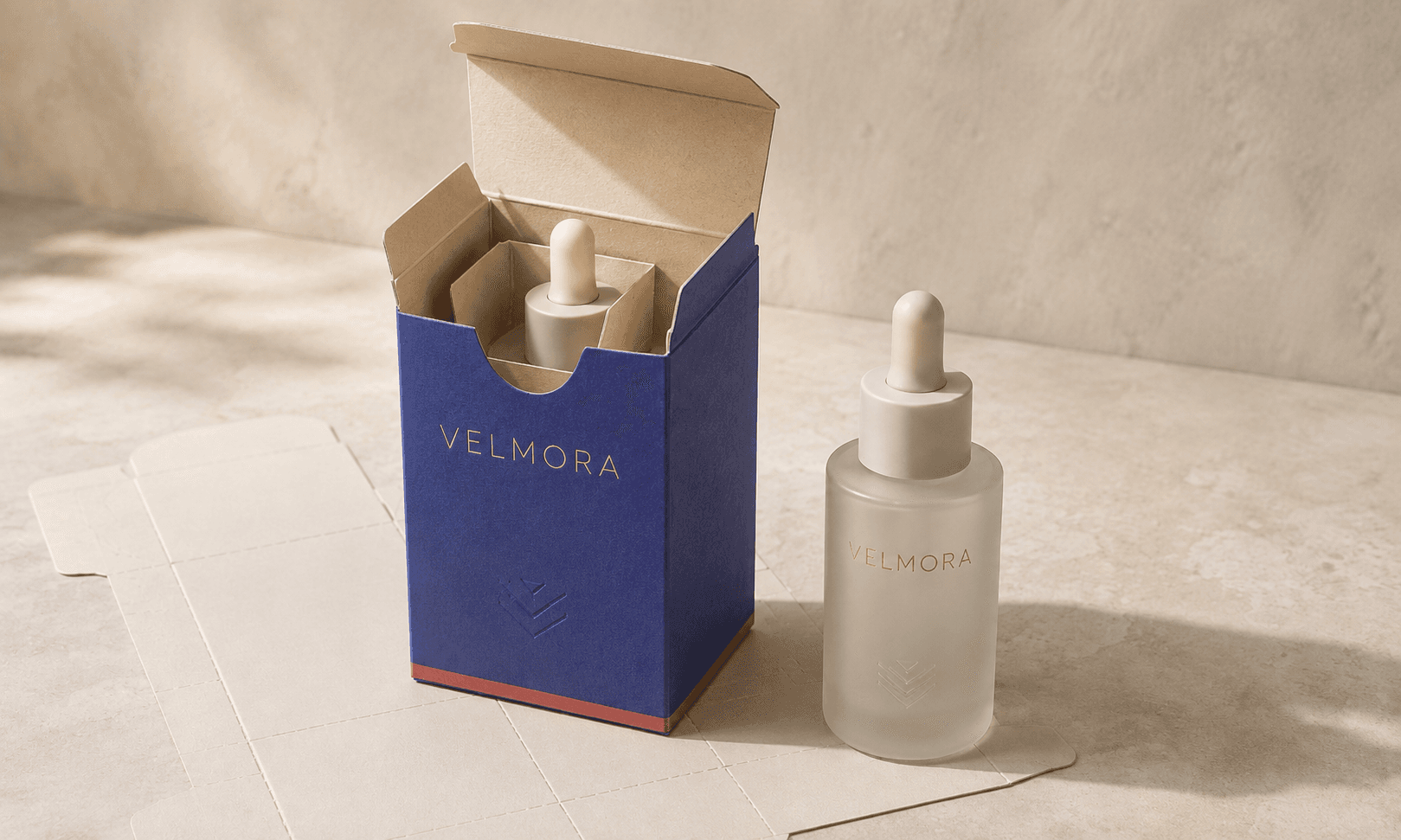
With a Straight Tuck End carton, the top and bottom tuck flaps close in the same direction. That can produce a particularly tidy front-facing panel.
I like Custom Straight Tuck End Boxes when branding, product names, variant information or a window need a clean display face and the contents are light enough for a simple base.
Cosmetics, lightweight skincare, small wellness products, essential oils and compact retail items are common candidates.
Reverse tuck end for efficient carton layouts
A Reverse Tuck End carton places the top and bottom closures in opposite directions.
Custom Reverse Tuck End Boxes can work well for small retail products where material efficiency, flat storage and straightforward hand packing are important.
But neither STE nor RTE magically becomes suitable for a heavy product because you specify thicker paperboard.
That is one of the mistakes I would stop before production.
Snap Lock Adds Mechanical Support
A snap lock bottom, also called a 1-2-3 bottom, uses multiple bottom flaps that interlock manually.
The packer normally folds them in sequence until the bottom locks together. There is no factory-glued automatic base.
That extra geometry gives the carton more bottom support than a standard tuck closure.
For candles, jars, small bottles, tech accessories and other moderately weighted products, Custom Snap Lock Bottom Boxes can be a sensible middle ground.
You gain base strength without paying for the added converting and gluing required by an auto lock construction.
But there is a catch.
Someone has to form that base on every single carton.
At 100 boxes, that may barely matter.
At 15,000 boxes, it can matter more than the carton price.
Auto Lock Moves Labour Into Manufacturing
An auto lock or crash bottom carton arrives with its bottom flaps already glued in the required configuration.
The packer opens the flat carton, squares the side panels and the base forms almost immediately.
That changes the economics.
Custom Auto Lock Bottom Boxes usually cost more to manufacture than an equivalent tuck or snap lock carton because the factory has to perform additional gluing and converting work.
But the business buying the carton may save that money somewhere else.
Instead of paying a warehouse employee to manually form four bottom flaps thousands of times, part of that labour has already been completed during carton production.
This is why I dislike comparing these structures only by unit price.
The invoice price is only one part of the cost.
The Real Cost Is at the Packing Bench
A cheaper box is not cheaper if it costs more to use.
Imagine one structure saves A$0.15 per carton compared with auto lock.
That sounds attractive across 10,000 units. The apparent saving is A$1,500.
But now suppose the cheaper structure adds enough manual assembly time that labour costs an extra A$0.30 per packed unit.
The business did not save A$1,500.
It spent an extra A$1,500 overall.
This is why I prefer to calculate what I call the total fulfilment cost:

A decision that looks expensive on the packaging quotation can be cheaper once the entire operation is considered.
My broader approach to choosing custom packaging for a product follows the same principle: start with physical and operational requirements before deciding what looks best.
A 15,000-Unit Candle Run Changed the Answer
One premium candle project makes the difference between these structures very clear.
The product was a hand-poured soy candle in a heavy glass jar weighing approximately 450 g.
The production run was 15,000 units.
The first choice was a Reverse Tuck End carton.
On paper, it made sense. The carton was economical, printed beautifully and gave the brand the clean minimalist panels it wanted.
The problem appeared when the real candle went inside.
The concentrated weight of the glass jar placed too much pressure on the simple tuck closure. During handling, the bottom could release and allow the jar to fall.
For a glass product, that is not an acceptable failure mode.
Snap lock solved the strength problem
The next step was a 1-2-3 snap lock base.
Structurally, it did what we needed. The interlocking bottom held the 450 g candle securely without requiring tape.
If the requirement had stopped at strength, we could have approved it.
But production quantity changed the decision.
Manually folding and interlocking each base took approximately 15 to 20 seconds during the packing trial.
Multiply that repetitive action across 15,000 boxes and you have a serious operational problem.
Auto bottom solved the labour problem
We moved to a Tuck Top Auto Bottom structure.
The pre-glued base formed as the carton was squared, bringing setup time down to roughly two seconds in the trial.
If you recover approximately 15 seconds across 15,000 cartons, that is 225,000 seconds of manual work.
That equals 62.5 hours.
The auto bottom cost more per unit to manufacture, but its carton price was no longer the important number.
The business gained more than 60 hours of packing capacity while also getting a base better suited to the glass jar.
In that production run, bottom failures fell to zero.

The premium customer experience at the top of the carton remained intact. What changed was the unseen part doing the hard work underneath.
That is exactly why box structure should be an operational decision before it becomes a design decision.
Weight Is Only the Starting Point
I would never turn the 200 g, 600 g or 700 g marks into hard universal specifications.
Weight distribution changes everything.
A 500 g object spread across a broad carton floor behaves differently from a 500 g glass bottle standing on a small footprint.
Tall, narrow products create concentrated downward pressure. Liquids can shift. Glass adds fragility. Irregular shapes can load one part of the base more heavily than another.
If you are still deciding whether paperboard is enough for the job, the differences between paperboard, corrugated and rigid boxes are worth resolving before you fine-tune the bottom mechanism.
For fragile products above roughly 600 to 700 g, I would treat a standard tuck end as a hard warning sign unless another structural element is carrying the load.
When I Break My Own Tuck End Rule
Tuck end does not automatically become wrong the moment a product gets heavier.
There are circumstances where I will keep it.
An insert can change the load path
A high-end perfume bottle or skincare jar may need the clean presentation of a straight tuck carton.
If a properly designed insert supports the product, controls movement and transfers load into stronger areas of the box, the simple tuck bottom may no longer be carrying the full burden by itself.
This is where insert design stops being decorative.
A fitted structure can change how force moves inside the carton.
The important question is not, “Does it have an insert?”
It is, “What is the insert actually supporting?”

If product support is central to the decision, choosing the right packaging insert needs to happen at the same time as the outer carton design.
Retail support changes the risk
A carton sitting inside a counter display has support underneath it for most of its customer-facing life.
That is different from a standalone carton being picked from a warehouse bin, dropped into a parcel and handled individually.
A slightly heavier product may therefore work in tuck end packaging for controlled retail use while requiring a stronger base when sold direct to the customer.
Context changes the structure.
When Snap Lock Still Wins at High Volume
High volume does not automatically mean auto lock.
There are two cases where I may still prefer snap lock.
Storage space is tight
Auto bottom cartons remain collapsible, but the pre-glued overlapping base creates extra layers in the flat carton.
Across a large production run, that can affect pallet density and warehouse space.
If storage is already constrained, I want to know how much room the packaging inventory can occupy before I approve the convenience of a pre-glued base.
A slower carton that stores more efficiently can still make commercial sense when space costs more than packing labour.
The insert needs a cleaner interior floor
An auto lock base has overlapping glued flaps inside the carton.
That can interfere with a tightly fitted insert.
If a die-cut insert, divider or product tray needs to slide down very close to the base, I want to test the exact geometry before selecting auto lock.
A snap lock construction can sometimes give us more useful internal clearance.
This is one reason I refuse to select the bottom mechanism before understanding the inside of the box.
When Auto Lock Makes Sense for Light Products
Auto lock is not reserved for heavy goods.
Sometimes speed alone justifies it.
Imagine a promotional launch involving 50,000 lightweight cosmetic samples that all need to be packed over a short campaign window.
The products may weigh almost nothing.
The labour does not.
Saving even five seconds per carton across 50,000 units recovers more than 69 hours of packing time.
At that point, choosing auto lock is not overengineering the product.
It is engineering the operation.
The same logic can apply to light but fragile glass vials or delicate electronic components. A box that squares immediately reduces the amount of wrestling, squeezing and repeated folding taking place beside a vulnerable product.
Retail and Ecommerce Need Different Thinking
A carton that performs perfectly on a retail shelf has not automatically passed an ecommerce test.
Retail cartons may move inside master cases, sit on shelves and experience relatively controlled handling.
Individual parcel delivery introduces different forces:
A premium tuck carton can therefore be completely appropriate as primary retail packaging while still needing a protective shipping carton around it for ecommerce.
Do not ask one piece of paperboard to do two unrelated jobs just because using one box sounds efficient.

Myth 1: Thicker Board Fixes a Weak Bottom
It does not.
This is one of the most expensive structural mistakes I see.
If a tuck flap is being forced open by concentrated product weight, adding heavier paperboard does not change the fundamental closure geometry.
You can end up paying more for a thicker carton that fails in the same place.
Strength comes from the complete structure.
Board grade matters, but it cannot rescue the wrong mechanism.
Choose the right base first, then specify material around it.
Myth 2: Tuck End Is Always Cheapest
It may be cheapest to manufacture.
That is not the same thing.
A carton that takes longer to form can cost more in labour. A weak base can cost more in damaged goods. Extra tape creates another material and another packing step.
I would rather pay slightly more for the right carton than repeatedly pay people to compensate for the wrong one.
The cheapest unit price can be a very expensive purchasing target.
Myth 3: Auto Lock Is Always Better
Auto lock is excellent when its strengths solve a real problem.
It is not automatically superior.
The pre-glued base can take more storage space. Internal flap geometry can interfere with close-fitting inserts. Added converting work increases the carton cost.
If a 100 g cosmetic carton is packed in small batches and its bottom carries almost no stress, an auto lock base may solve a problem that does not exist.
Better packaging is not more engineering.
It is the right amount of engineering.
Myth 4: Shelf Performance Proves Delivery Performance
Shelf stability tells you very little about parcel performance.
A carton can stand perfectly upright for months and still fail after repeated drops or vibration.
This matters particularly for glass bottles, candles, jars and liquids.
If the product will be shipped individually, test it as a shipped product.
Do not approve ecommerce packaging based on how attractive it looks standing on a desk.
Myth 5: Appearance Should Choose the Structure
The box should be designed from the inside out.
Start with:
Only then should appearance decide between the structures that are physically suitable.
Premium print cannot repair a collapsing bottom.
My Three Non-Negotiables
Before I approve tuck end, snap lock or auto lock, I need three things settled.
Product weight and fragility
I need the product's real filled weight, not an estimate based on an empty bottle or jar.
Fragility matters at the same time.
A dense metal item and a glass container of identical weight do not carry the same commercial risk if they hit the floor.
Packing volume and labour
I want to know how many cartons the business will actually assemble.
Five hundred manually locked boxes can be manageable.
Twenty thousand can change the entire decision.
I also want to know who is packing them. Founder-packed launch orders, permanent warehouse staff, temporary workers and automated cartoning lines create different constraints.
Insert geometry
If there is an insert, I need to know that before locking the base structure.
The insert and box are one mechanical system.
Choosing them independently is asking for fit problems later.
The Dieline Tool can help establish the carton dimensions before artwork is committed, but the physical product, insert and complete sample still need to work together.
Four Tests I Want Before Production
I would not approve thousands of folding cartons from a screen alone.
The 10-second loaded shakedown
Put the real product inside the unprinted structural sample.
Do not reinforce it with tape unless tape is part of the intended packing process.
Hold the carton from the top and give it a controlled vertical shake for around ten seconds.
Watch the base.
If the flaps bow, sag, unlock or visibly move under the product, I would not approve the structure.
The stopwatch test
Give the flat carton to the person who will actually pack orders.
Time the full process:
Now multiply that time by the production quantity.
That number is often more useful than comparing two carton quotations.
The insert fit test
Assemble the carton completely before loading the insert.
The insert should enter cleanly.
If it catches on base flaps, bows the side walls, sits at an angle or needs excessive force, something is wrong.
Do not assume production tolerances will magically make a bad prototype fit better.
The real delivery test
Pack the real product exactly as a customer will receive it.
Seal it.
Label it.
Send it via the delivery method the business actually expects to use.
Then inspect:
A sample that survives being carried around the office has not been tested for ecommerce.

The Decision Process I Actually Use
When somebody asks me which bottom style they need, I work in this order.
First, I check the product's real weight and where that weight sits.
Then I look at fragility.
Next comes the packing operation. I want to know quantity, who will assemble the cartons and how much packing time the business can realistically absorb.
Then I check the journey. Retail shelves, wholesale cases and individual parcel delivery create different structural demands.
After that, I deal with inserts, dividers and internal clearance.
Storage comes next.
Presentation matters, but only after I know which structures can safely do the job.
Cost comes last because by then I am comparing suitable choices rather than comparing a cheap unsuitable carton with an expensive suitable one.
That distinction matters.

Which One Should You Choose?
Choose tuck end when the product is light, the base is under limited stress and clean retail presentation matters. It remains one of my preferred constructions for cosmetics, small wellness products, lightweight bottles and other compact retail items.
Choose snap lock when the product needs more bottom security but the production quantity or packing setup does not justify a pre-glued base. It is particularly useful for moderately weighted jars, candles, bottled products and dense small goods.
Choose auto lock when the base must carry more load, the product is fragile or packing speed has become a serious cost. It is often the strongest commercial choice once production moves from hundreds into thousands and manual bottom assembly starts consuming labour.
But do not force every product into one rule.
A heavy product with the right insert can change the tuck-end calculation.
A high-volume operation with little warehouse space can still favour snap lock.
A lightweight product packed 50,000 times can justify auto lock purely because seconds matter.
That is why I treat the box bottom as part of the operating model, not a minor dieline detail.
Choose the Box That Still Works at Unit 15,000
A packaging decision should still make sense after the excitement of the first prototype has disappeared.
The first carton may take 20 seconds to assemble and feel completely acceptable.
The 15,000th one tells you whether you chose well.
The strongest structure is not automatically the best structure. The lowest carton price is not automatically the lowest cost. The cleanest-looking box is not automatically the right one.
I want the carton to protect the product, form consistently, work with the insert, fit the warehouse and let the packing team do its job without fighting the packaging.
If you are choosing between tuck end, snap lock and auto lock, send the actual product dimensions, filled weight, order quantity, insert requirements and packing method when you get a quote. Those details are enough to start eliminating the structures that do not belong in the conversation.
The right carton should look good when the customer sees it.
It should also make sense long before that moment, while it is still flat on the packing bench.