Custom Protective Electronics Packaging
Reduce movement, edge impact and crushing around fragile devices with protective structures planned around real weight, weak points and delivery handling.
Free Design Support
Clear Pricing
Flexible Quantities
Unlimited Customization
Premium Materials
Offset Precision
Free Shipping
Quick Turnaround
Custom Protective Electronics Packaging for Fragile Devices
Custom Protective Electronics Packaging should control movement, shield weak areas and spread pressure before it focuses on appearance. The device, its accessories and the outer carton need to work as one protective system.
Fragile electronics can include control units, cameras, sensors, networking equipment, test devices and high-value consumer products. Some have screens or lenses. Others have exposed connectors, aerials, switches or fitted parts that should not carry load.
The starting point is the complete boxed item at its real weight. Measure the device with any approved wrap, cable, adapter, manual and mounting parts. Then identify where the product can be supported and which areas need clear space.
Custom Electronics Packaging covers retail, device and accessory needs across the sector. Custom Protective Electronics Packaging goes further into transit risk, stronger outer structures and internal supports for items that cannot be allowed to shift.
High-value consumer electronics
Cameras, smart devices and control hubs may need close-fit trays, corner clearance and a clean retail box inside a stronger shipping carton.
Industrial and trade equipment
Meters, controllers and electronic tools can be dense or uneven. Their packaging may need corrugated cradles, layered supports and separate spaces for leads or probes.
Component sets and service kits
Boards, modules and replacement parts often need physical separation. ESD-sensitive items may also need a specified static-control layer before the paper-based structure is designed around them.

Start With the Damage Risk, Not a Stock Box
A stock carton only answers the outer size. Custom Protective Electronics Packaging should answer what could damage the product and where that force is likely to reach it.
Transit risk can come from a drop, repeated vibration, stacking pressure or a heavy accessory moving inside the box. A plug, bracket or metal part can also damage the main device if the inner layout allows contact.
Map firm and weak contact points
Mark the case edges, structural base and other areas that can carry support. Also mark screens, lenses, vents, controls, connectors and raised details that should remain free.
This contact map helps the insert restrain the device without creating a new pressure point.
Account for the filled weight
A light empty sample does not show how the base or insert behaves. Custom Protective Electronics Packaging should be assessed with every supplied part inside and the real item weight applied.
Separate parts that can collide
Cables, adapters, mounts and tools should not move against the main device. A divider or lower compartment can keep hard parts away from coated or delicate surfaces.
Create a Clear Protection Zone Around the Product
A protection zone is the controlled space between the device and the outer walls. It gives the insert room to restrain the product while keeping corners, controls and fragile faces away from direct impact.
The zone does not need to be large. Oversized packaging can allow more movement and increase delivery volume. The aim is a close structure with support in the right places.
Keep corners from touching the carton
Corners often receive force when a parcel is dropped or compressed. End blocks, folded rails or a suspended paperboard cradle can keep the product away from the outer wall.
Leave clearance above raised details
The lid and upper insert should not rest on switches, lenses, sockets or display faces. Measure the highest point of the product, not only its main body.
Allow safe removal
A close fit still needs finger access, an open side or a paper pull tab. Customers and service teams should not need to shake the device out or pull on a connector.
Use Inserts to Restrain Weight and Organise Parts
The insert does more than improve presentation. In Custom Protective Electronics Packaging, it determines how movement is stopped and where product weight is transferred.
Custom Inserts and Dividers can use folded paperboard, corrugated cradles, partitions and layer pads. The choice depends on weight, shape, accessory count and the level of delivery handling.
Folded paperboard for lighter devices
A paperboard cradle can suit compact devices with regular shapes. It can create a clean first view while holding firm case edges.
Corrugated supports for denser products
Corrugated inserts add depth and resistance for heavier items. Folded end caps can absorb space at each end while keeping the centre of the device clear.
Layered compartments for complete sets
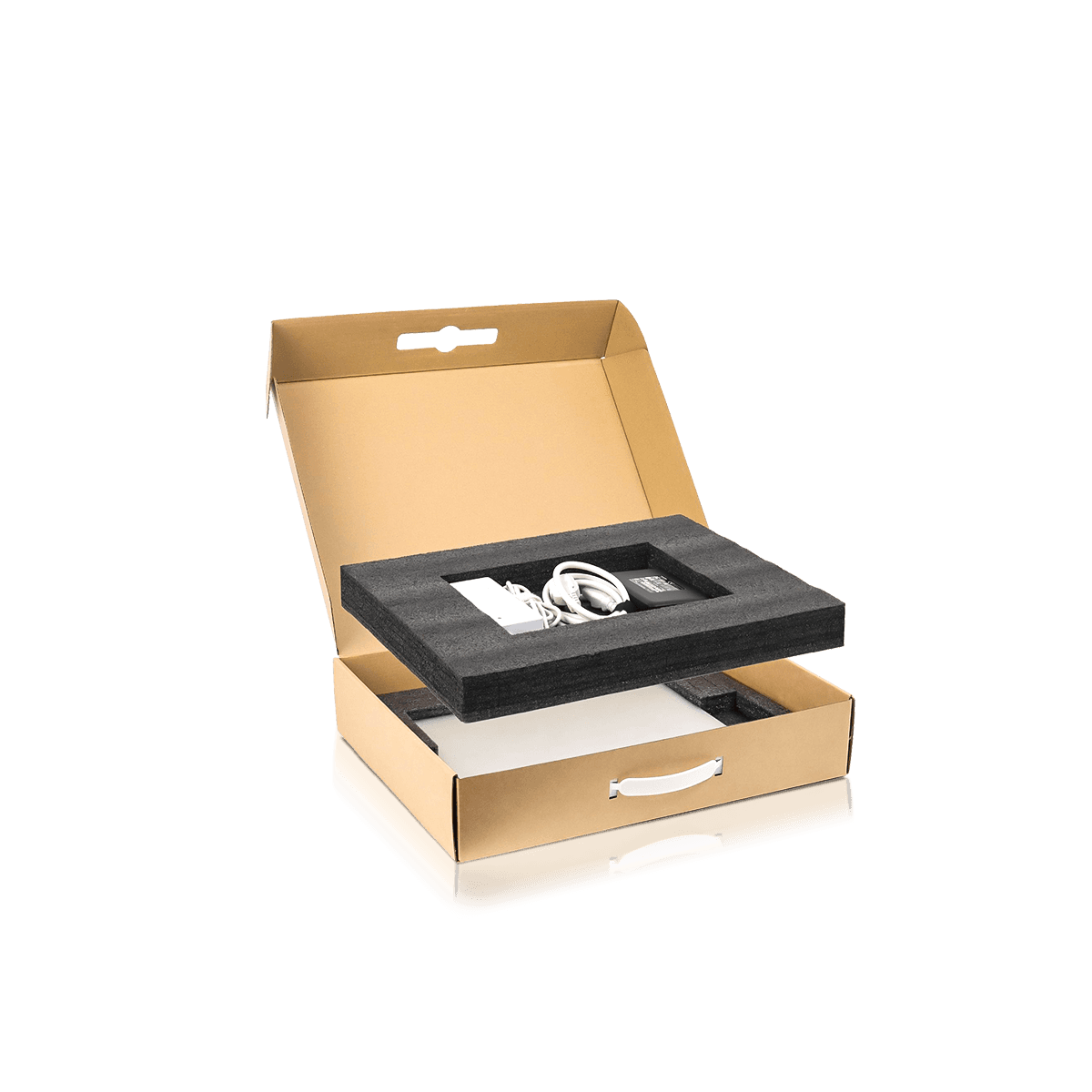
A top tray can hold the main device. A lower level can carry the adapter, cable and paperwork. Custom Electronics Insert Boxes are useful when the inner layout is central to both protection and opening order.
Choose Board Strength Around the Delivery Task
Custom Protective Electronics Packaging may use paperboard for the retail box and corrugated board for the shipping layer. One material does not need to perform every job.
Paperboard gives a smooth print surface and suits lighter products. Corrugated board adds fluted structure for parcel handling, stacked cases and heavier devices. Rigid board may suit a premium presentation, but it may still need a separate delivery outer.
Custom Shipping and Postal Boxes can provide the outer strength for direct delivery, wholesale cases or service equipment moving between sites.
Match the board to the total load
Box dimensions alone do not determine strength. Filled weight, stacking, flute choice and the way the insert transfers load all matter.
Protect print and labels
A plain shipping carton keeps courier labels, tape and scuffs away from the retail box. It also preserves barcodes, handling text and model details for the customer.
Avoid relying on loose fill
Void fill can close small gaps, but it should not replace a fitted structure. A heavy device can move through soft fill and strike the outer wall.
Separate Retail Presentation From Transit Protection
A polished retail box and a protective shipping system can share dimensions without being the same structure.
Retail packaging needs clear product details, clean print and a controlled reveal. Delivery packaging needs resistance to knocks, compression and repeated handling. Custom Protective Electronics Packaging can combine these needs through a printed inner box, fitted insert and close corrugated outer.
This layered approach also helps when the same device is sold through stores and online. The retail box stays consistent, while the outer carton changes according to delivery quantity or destination.
Single-item online orders
Use a close outer carton with enough clearance to protect corners and finishes. The retail box should not slide or carry direct courier-label pressure.
Multi-unit trade cases
Dividers, layer pads or cells can keep several retail boxes upright and stop face-to-face rubbing during distribution.
Service and return use
Some equipment may be stored or returned in its original packaging. A durable insert and clear loading order make it easier to place every component back safely.
Treat Static Control as a Separate Requirement
Paperboard and corrugated structures provide physical protection, but they should not be presented as ESD protection unless the materials and complete system have been specified for that purpose.
For an ESD-sensitive device or component, confirm the required protective bag, tray, wrap or other approved material first. Custom Protective Electronics Packaging can then be designed around that layer without crushing it or forcing the item out of its intended orientation.
The EOS/ESD Association states that ANSI/ESD S541 defines packaging properties for ESD-susceptible items during production, transport and storage. The static-control requirement should therefore come from the product’s approved ESD plan rather than a general packaging assumption.
Measure the item with its approved ESD layer
The bag or tray changes the working dimensions and may need extra space around seals, folds or labels.
Keep handling text clear
Reserve artwork space for confirmed symbols and handling instructions. Do not add static-control marks that have not been approved for the item.
Test the Whole System at Real Weight
A useful test examines the device, insert, retail box and delivery outer together. Testing only one layer can miss movement or pressure created by another.
Load every accessory in its intended position. Close the boxes, lift the complete unit and check whether the insert sags or parts move. Turn it through different orientations and reopen it to inspect corners, surfaces and compartments.
Custom Protective Electronics Packaging with a deep tray, heavy device or several layers often benefits from a physical sample before full production. A 3D mockup can still confirm artwork, dimensions and panel order before that stage.
Check for movement, not only visible damage
A device may arrive without a cracked surface yet still show rubbing, shifted accessories or pressure marks. Listen for movement and inspect contact points.
Check the loading process
The structure should be practical for staff to assemble and fill in the right order. A protective design that is easy to load is more likely to remain consistent across the full order.
Check the delivery outer
Make sure the retail box does not move inside the outer carton. The outer walls should not press on windows, raised finishes or weak panels.
Plan Different Devices Without Forcing One Structure
A product line may contain light sensors, dense control units and larger equipment. They can share a visual identity without sharing the same protective design.
Keep logo position, type style and information order consistent. Change the board, insert and outer dimensions when weight or weak points change.
Custom Product Packaging can support several related products where each item needs its own structure but the brand still requires a consistent look.
Separate artwork changes from structural changes
A new colour may need revised print only. A heavier battery, larger adapter or moved connector may require a new insert and box depth.
State quantity by each version
Give the order amount for every size, artwork and insert. One total figure can hide several small production splits and lead to an inaccurate price.
Order From Trial Quantities to Ongoing Supply
MOQ starts from 50, which can suit a pilot device, replacement component or controlled product launch. Custom Packly also supports orders in the thousands and larger repeat requirements.
For Custom Protective Electronics Packaging, the approved specification should record the device dimensions, filled weight, board, insert, outer carton and loading order. This makes later production easier to check.
A product revision should trigger a fit review. Even a small change to a bracket, screen, cable or case can alter contact points and movement inside the box.
Send Transit and Product Details for an Accurate Quote
Pricing Custom Protective Electronics Packaging requires the complete product and its expected delivery use. Send:
- Device dimensions and filled weight
- Photos from several angles
- Screens, lenses, ports and controls that need clearance
- Accessories, mounts, leads and manuals
- Existing ESD layer or handling requirement
- Quantity for each device and print version
- Retail box, single delivery or trade-case use
- Preferred paperboard, corrugated board or rigid presentation
- Insert and compartment needs
- Artwork status and required date
Custom Packly can then assess the retail box, protective insert and outer carton together. Send the project through Get a Quote so the recommendation reflects the real device, risk points and order split.
FAQs
Related Packaging Styles
How it works
Simple steps from idea to delivery
Tell Us Your Specs

Tell Us Your Specs
Provide size, quantity, printing, and finishes.
Get a Fast Quote

Get a Fast Quote
Instant transparent pricing, no hidden fees.
Design and Approval

Design and Approval
Artwork checks, revisions, and final sign-off.
Produce

Produce
Expert manufacturing to meet deadlines.
Ship to Your Door

Ship to Your Door
Hassle-free, flexible delivery options.
Start Your Custom Packaging Quote
Share your product details, dimensions, quantity and artwork needs. We’ll help choose the right packaging style and send a clear quote.